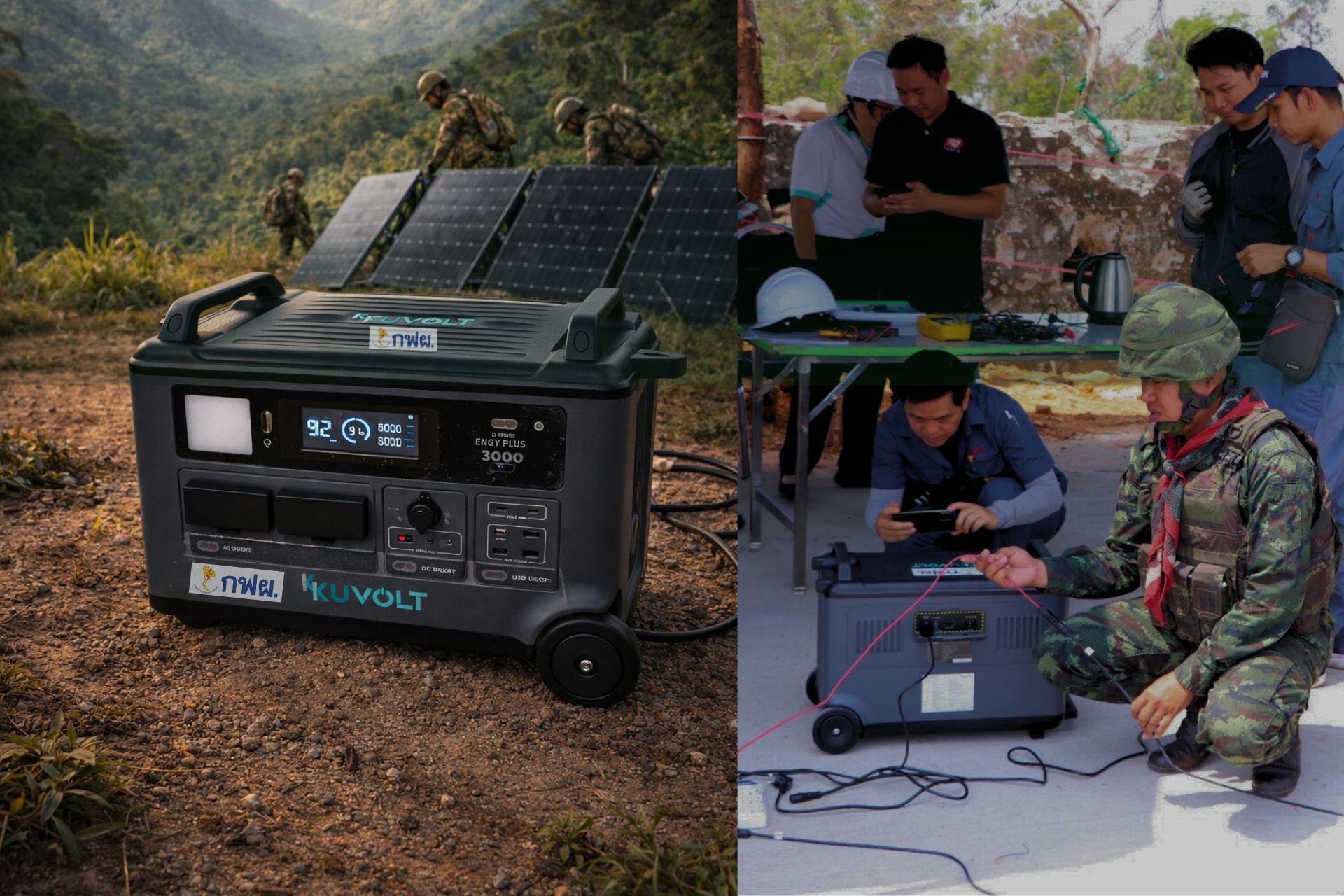
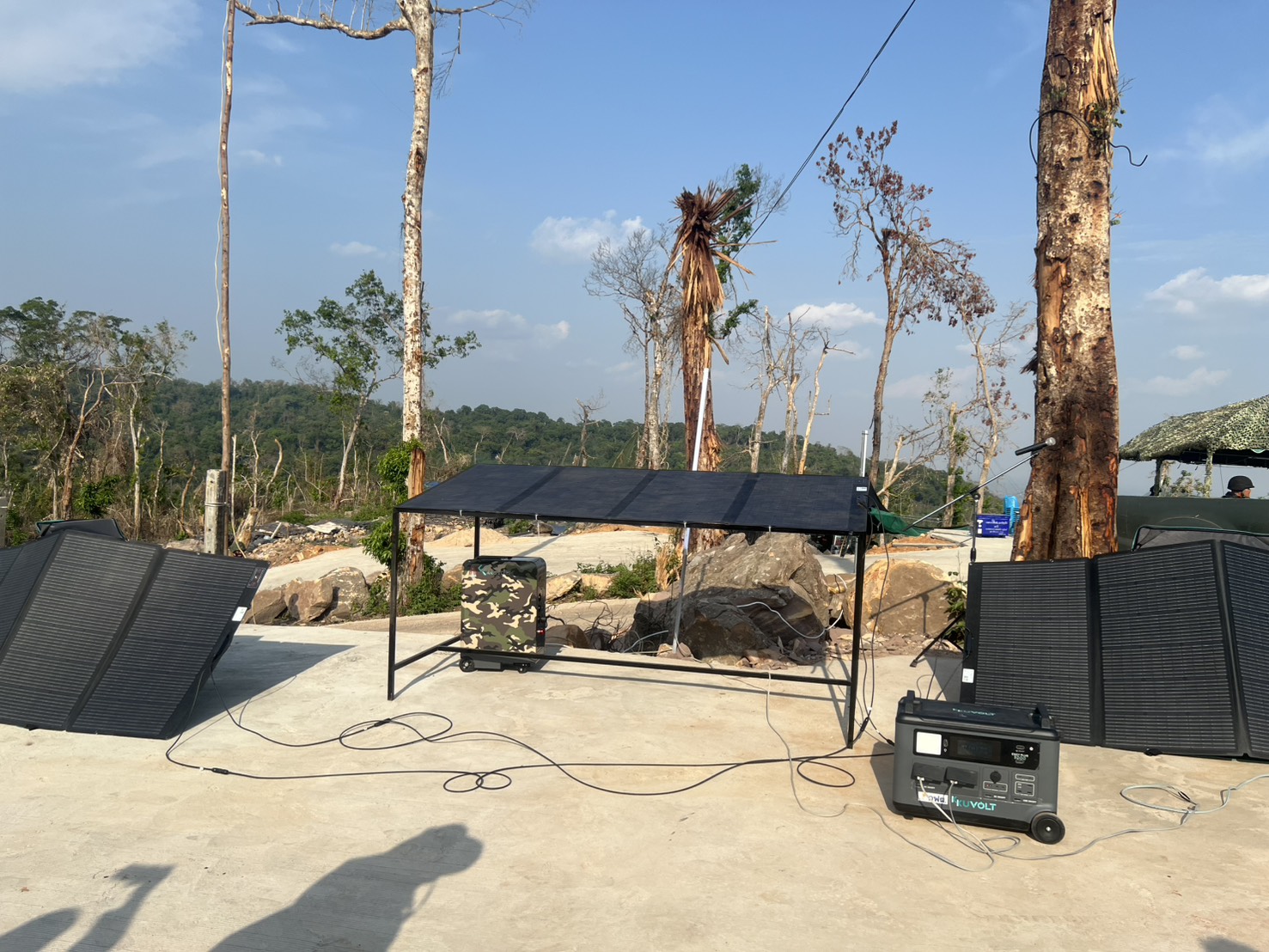
Khon Kaen University, in collaboration with the Electricity Generating Authority of Thailand (EGAT), has delivered the innovative “KKUVOLT” portable solar power system with batteries. This system aims to enhance the energy capabilities of border operating bases, reduce reliance on fossil fuels, and promote domestically produced technology for sustainable national security.
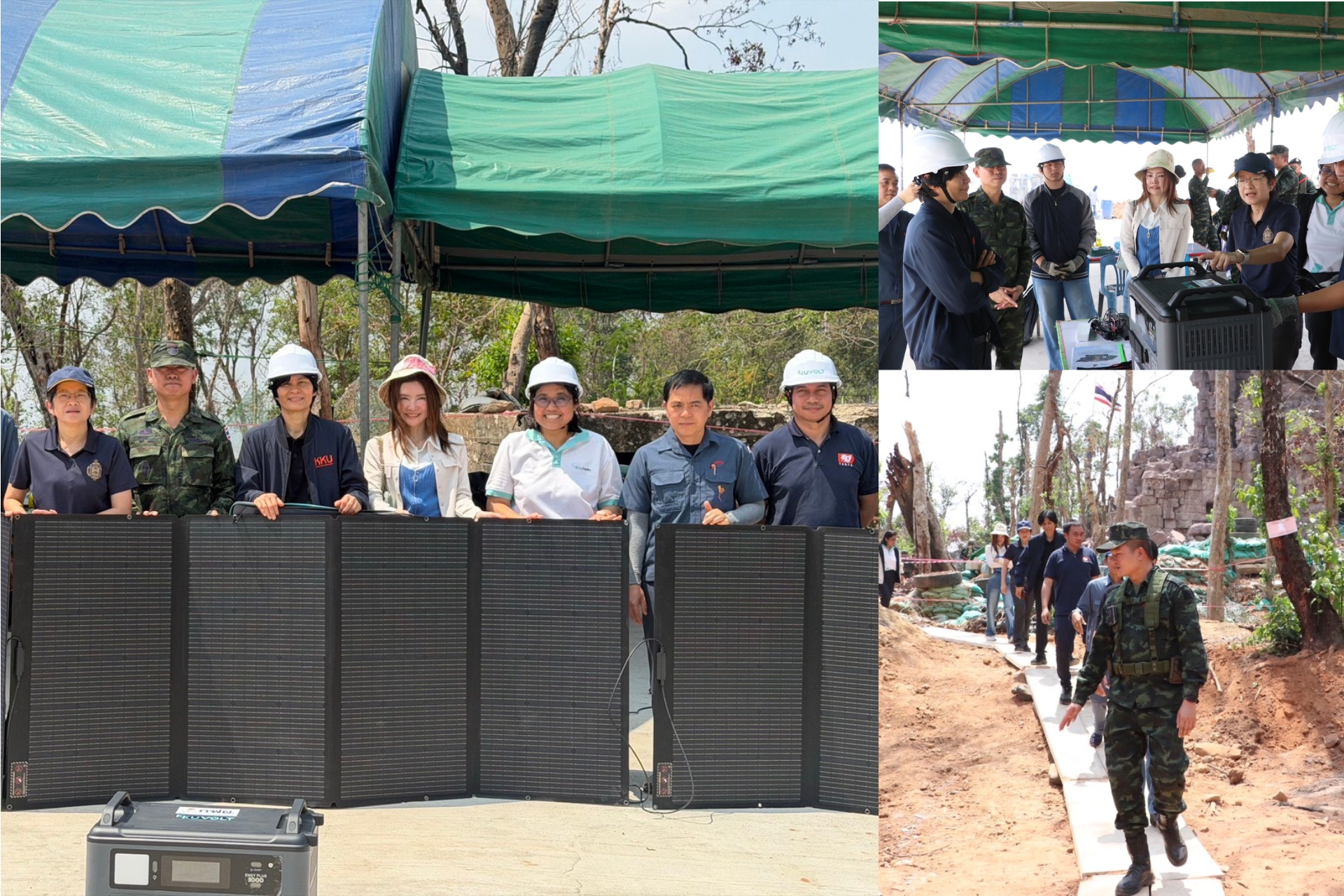 Prof. Thidarut Boonmars, D.V.M., Ph.D., Vice President for Enterprise and Societal Sustainability at Khon Kaen University, along with Associate Professor Dr. Nongluk Meethong, Director of the Battery and Modern Energy Factory, and a team of engineers, visited the Neun 350 Operating Base of the Suranaree Task Force at Weerawat Yothin Camp, Surin Province, on 4 March 2026, to conduct site preparation and assessment for the installation of the portable solar power system with batteries, supported by EGAT.
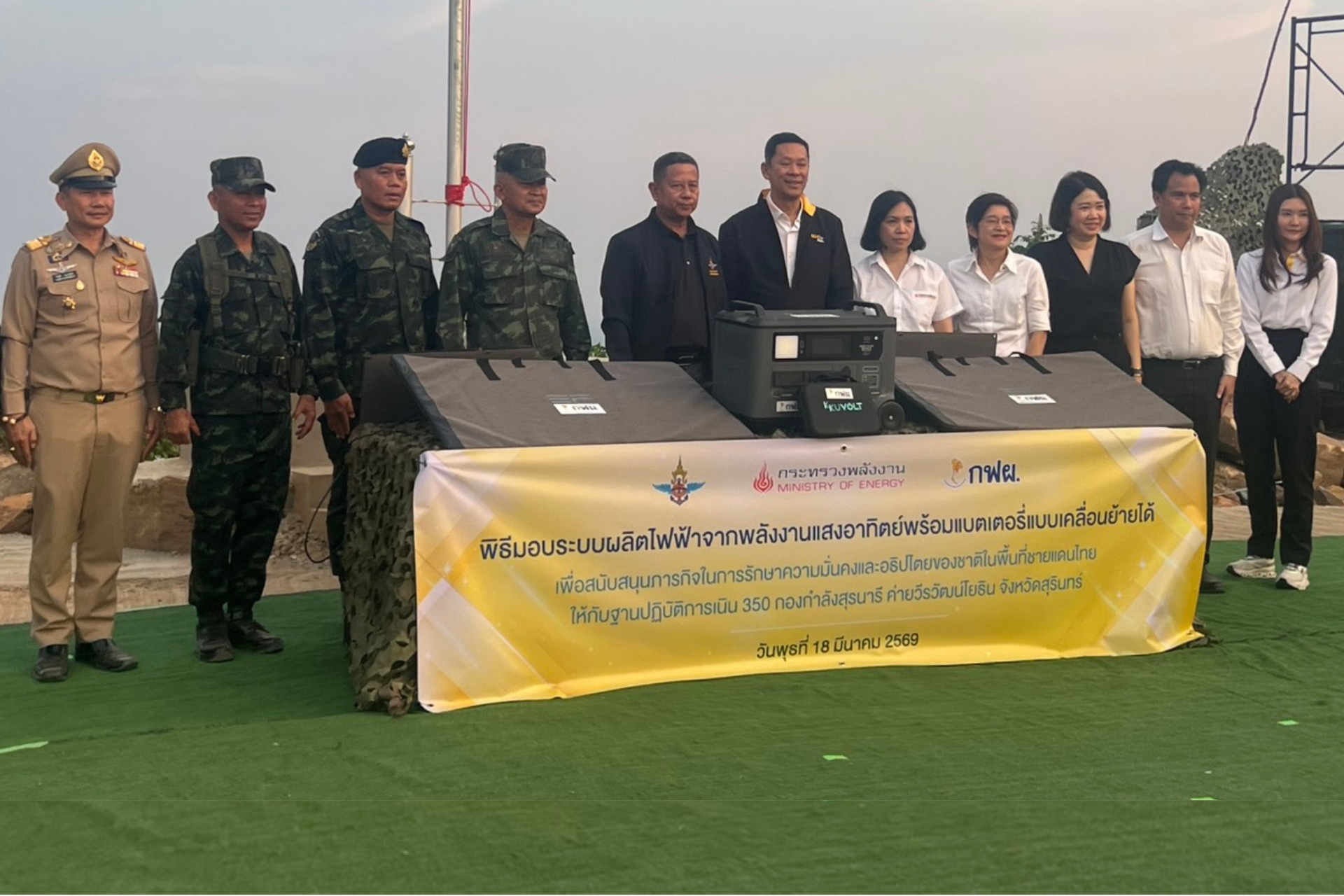
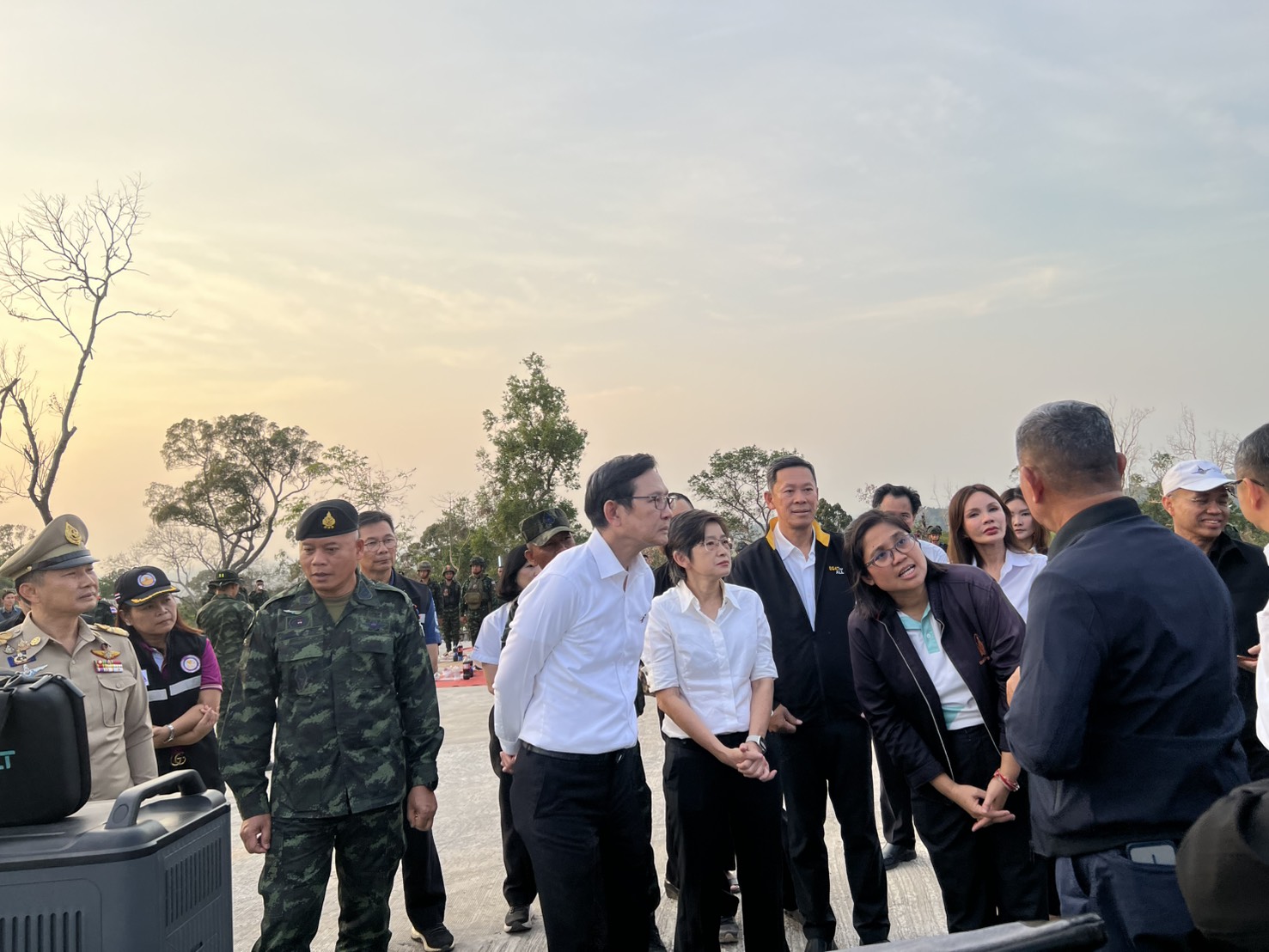
Subsequently, on March 18, 2026, an official handover ceremony for the system took place at the Neun 350 Operating Base. High-ranking executives from both the security and energy sectors attended, including Lieutenant General Adul Boontamcharoen, Deputy Minister of Defense, and Mr. Atthapol Rerkpipat, Minister of Energy, along with executives from EGAT, Khon Kaen University, and other relevant agencies.
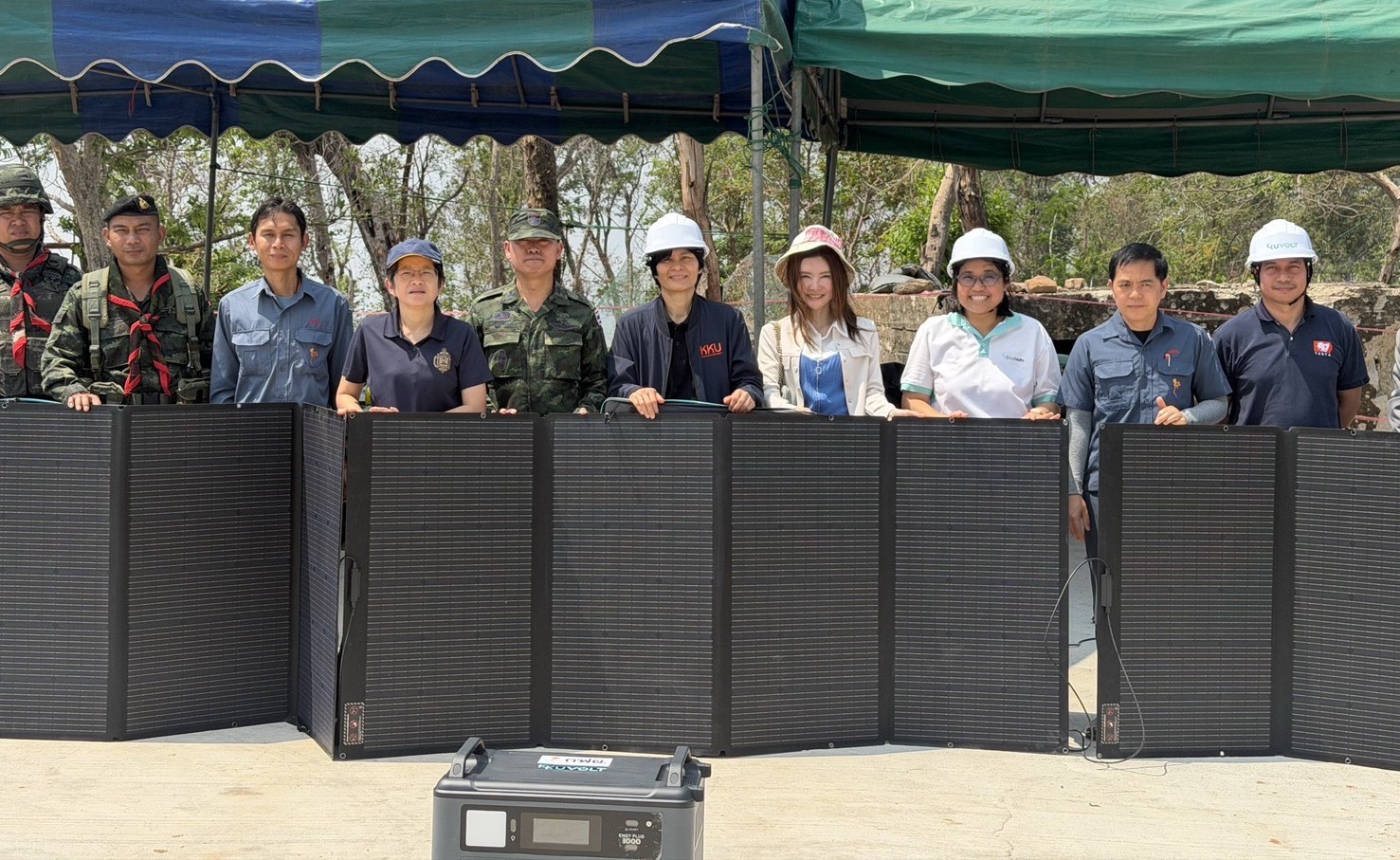
Prof. Thidarut Boonmars, D.V.M., Ph.D., Vice President for Enterprise and Societal Sustainability at Khon Kaen University (in a black long-sleeved shirt, standing center), stated that this project integrates the university’s knowledge in clean energy to meet practical demands in challenging areas, particularly border regions of national security importance. “The university aims to develop innovations that are practical, help reduce energy costs, increase operational continuity, and enhance the quality of life for personnel in the area.”
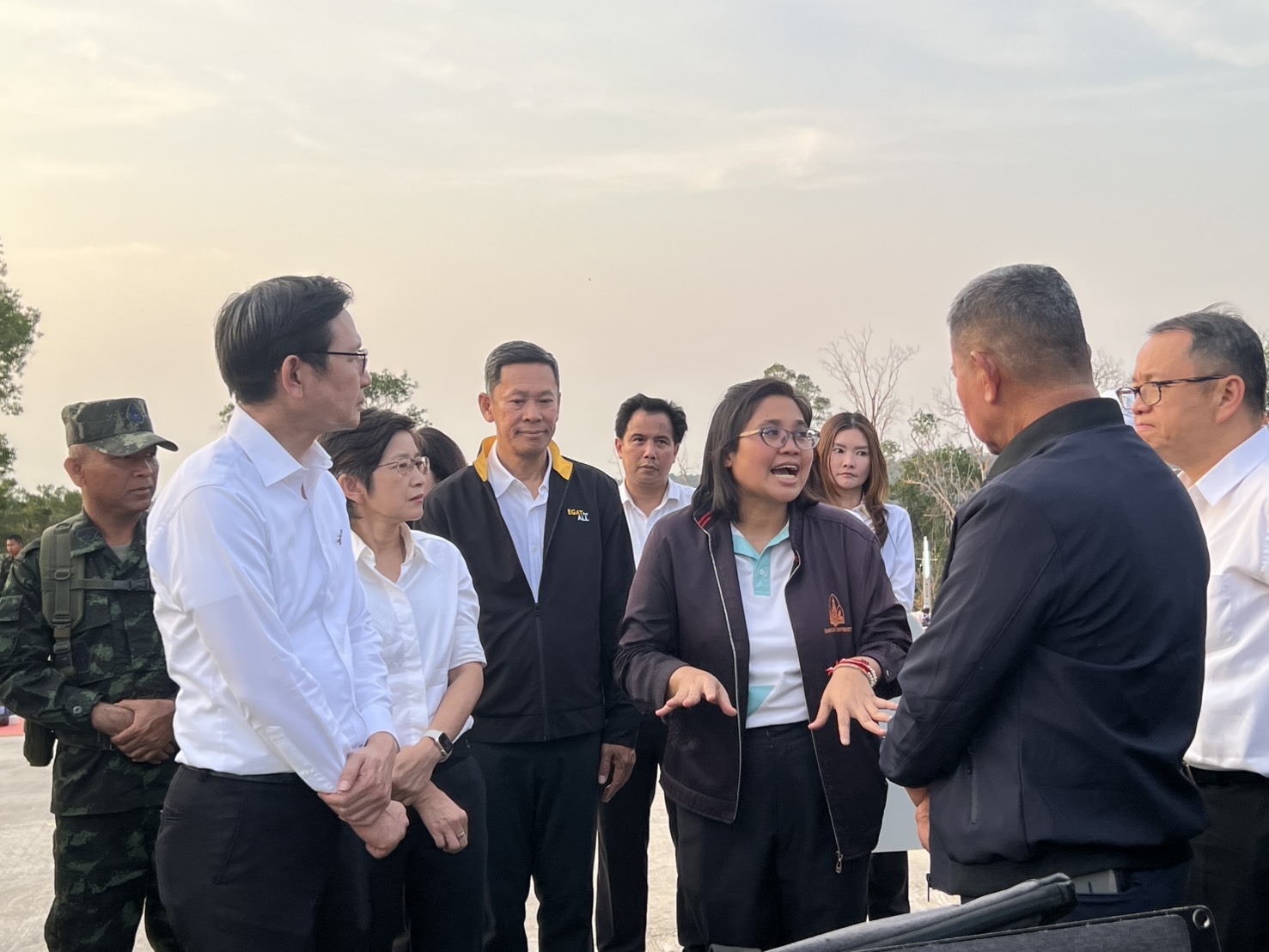
Associate Professor Dr. Nongluk Meethong, Director of the Battery and Modern Energy Factory (speaking), added that local manufacturing is a key strength of the project, reducing risks associated with reliance on imported equipment and enabling full control over production standards. “The developed system not only addresses energy needs but also considers data security and the stability of electronic systems, ensuring confident use in operational areas.”
The project aims to enhance energy security in border areas, which face limitations in infrastructure and access to electricity, as well as difficulties in transporting fuel for generators. The portable solar power system with batteries thus serves as a vital alternative, reducing energy risks, decreasing reliance on fossil fuels, and supporting the use of clean energy in operational areas.
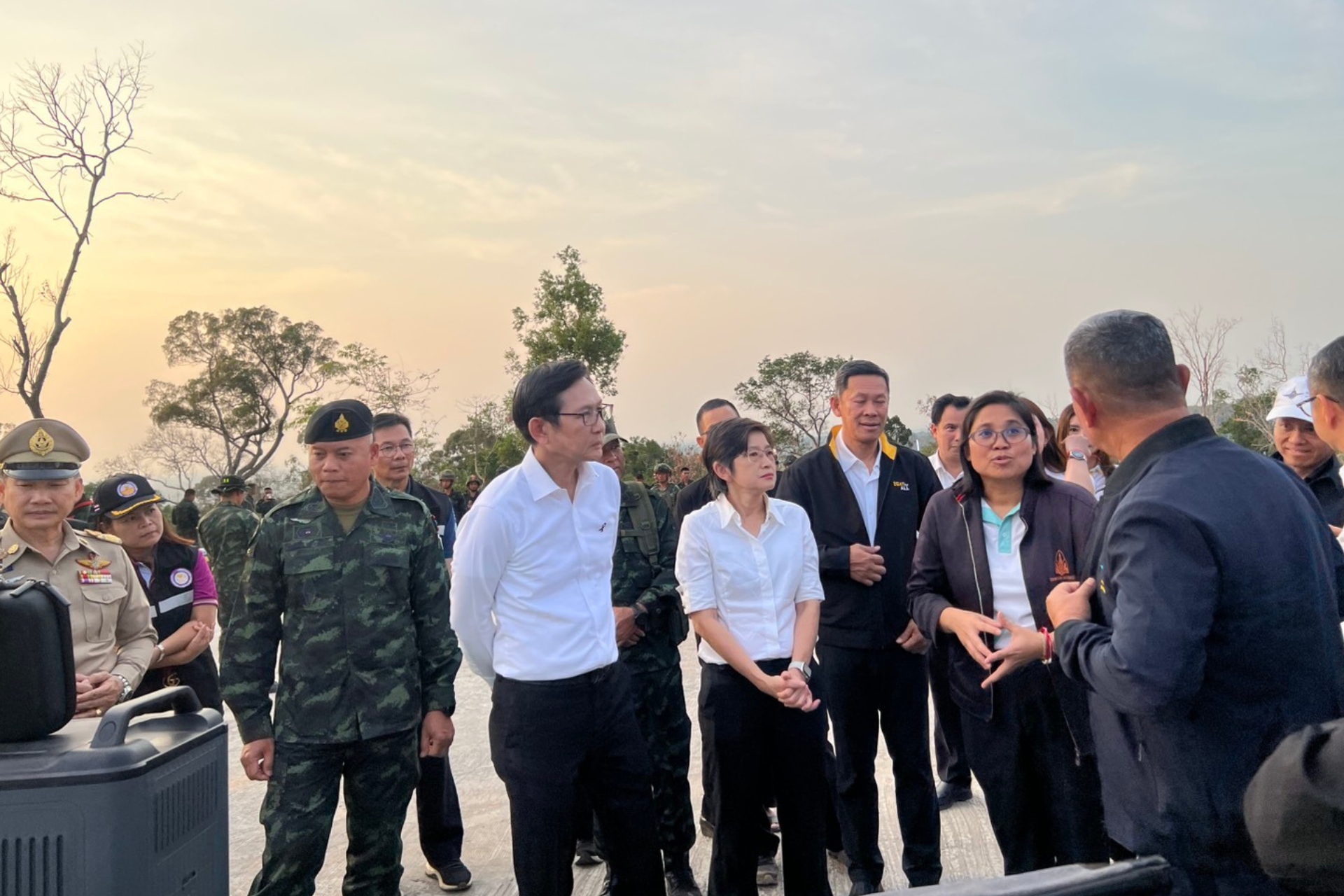
Associate Professor Dr. Nongluk Meethong also had the opportunity to exchange ideas on energy technology development for security missions with high-ranking military executives. This emphasized the importance of developing and producing technology domestically (Local Manufacturing) to reduce the risks of relying on foreign security equipment. This approach allows for full control and inspection of the entire production process, mitigating the risk of malicious electronic devices being embedded, which could be used for unauthorized tracking or data access. Furthermore, it instills confidence that the electronic systems within the power generation and energy storage systems will not be easily interfered with, signal jammed, or controlled externally, enabling personnel to operate confidently, safely, and continuously in security operational areas.
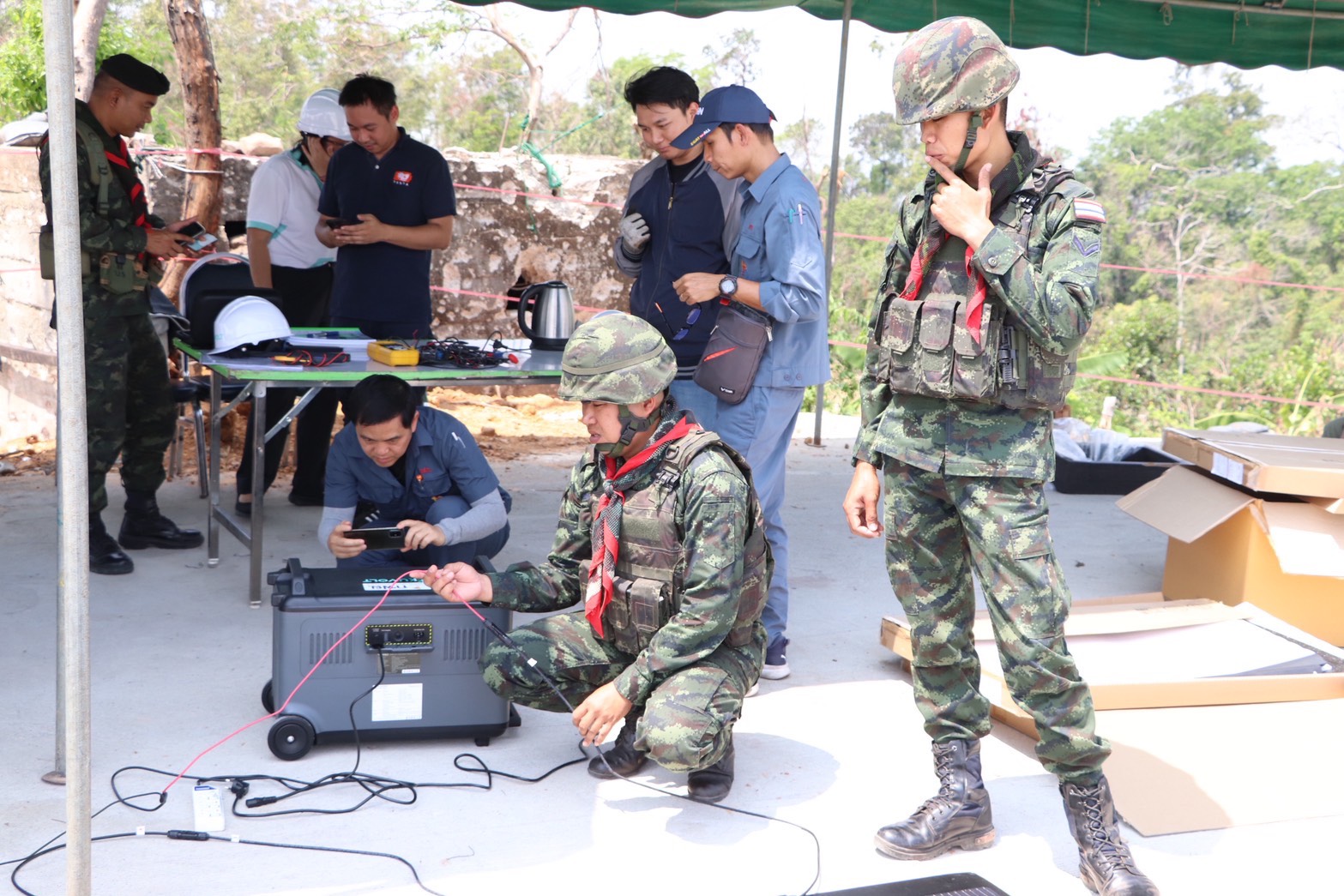
In addition, the advantages of domestic production are evident in delivery readiness and after-sales service, including locally available equipment, rapid on-site support, and efficient maintenance during the warranty period. This reduces system downtime and enhances operational continuity. Furthermore, domestic maintenance allows for advanced diagnostics and component-level repairs, extending product lifespan. In contrast, imported systems often rely on foreign manufacturers, and damaged equipment may be difficult to repair or replace, leading to unnecessary disposal. The domestic approach therefore supports a circular economy model and contributes to waste reduction.
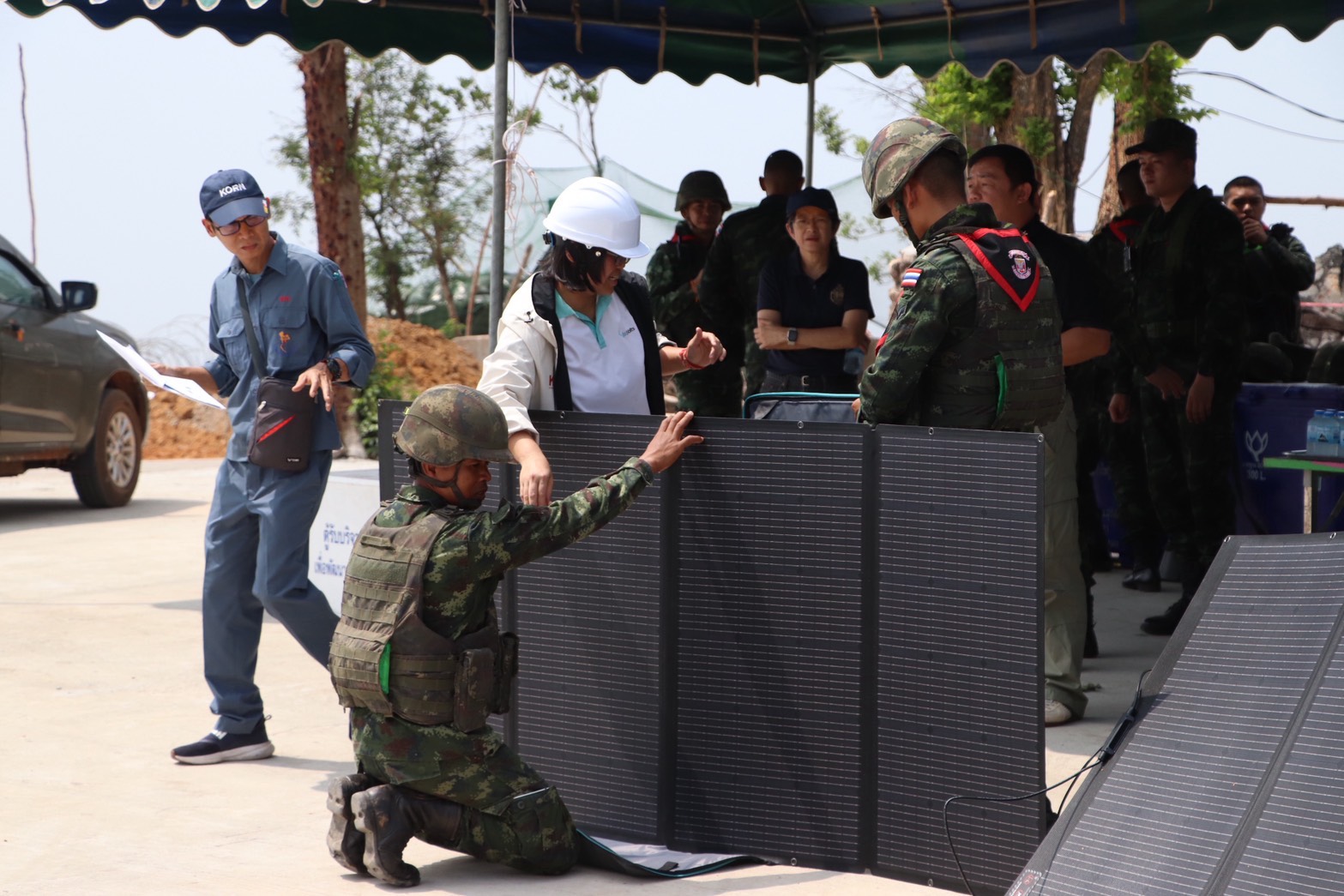
The Mobile Power Station ENGY PLUS 3000 is an innovation developed by the research and engineering team of KKUVOLT, Khon Kaen University. It is designed to support usage in fieldwork and remote areas, providing a maximum power output of 3.6 kilowatts and an energy capacity of 3 kilowatt-hours. It supports both solar energy and general electrical systems. The system is currently undergoing testing according to military standards (MIL-STD) in collaboration with the Research and Development Office of the Royal Thai Army (RDO, RTA) to enhance the country’s energy security and concretely promote the use of domestically produced clean energy technology.
This collaboration reflects Khon Kaen University’s role as a leader in clean energy innovation, capable of applying knowledge in challenging areas, addressing both energy security and sustainable development for the country.
News: Benjamaporn Mamook
Information/Image: KKUVOLT Battery and New-Era Energy Factory, Khon Kaen University