
Researchers from the Faculty of Science have launched a technology transfer initiative for expanding fungal inoculants to combat plant diseases, aiming to reduce agricultural costs and promote a circular economy.
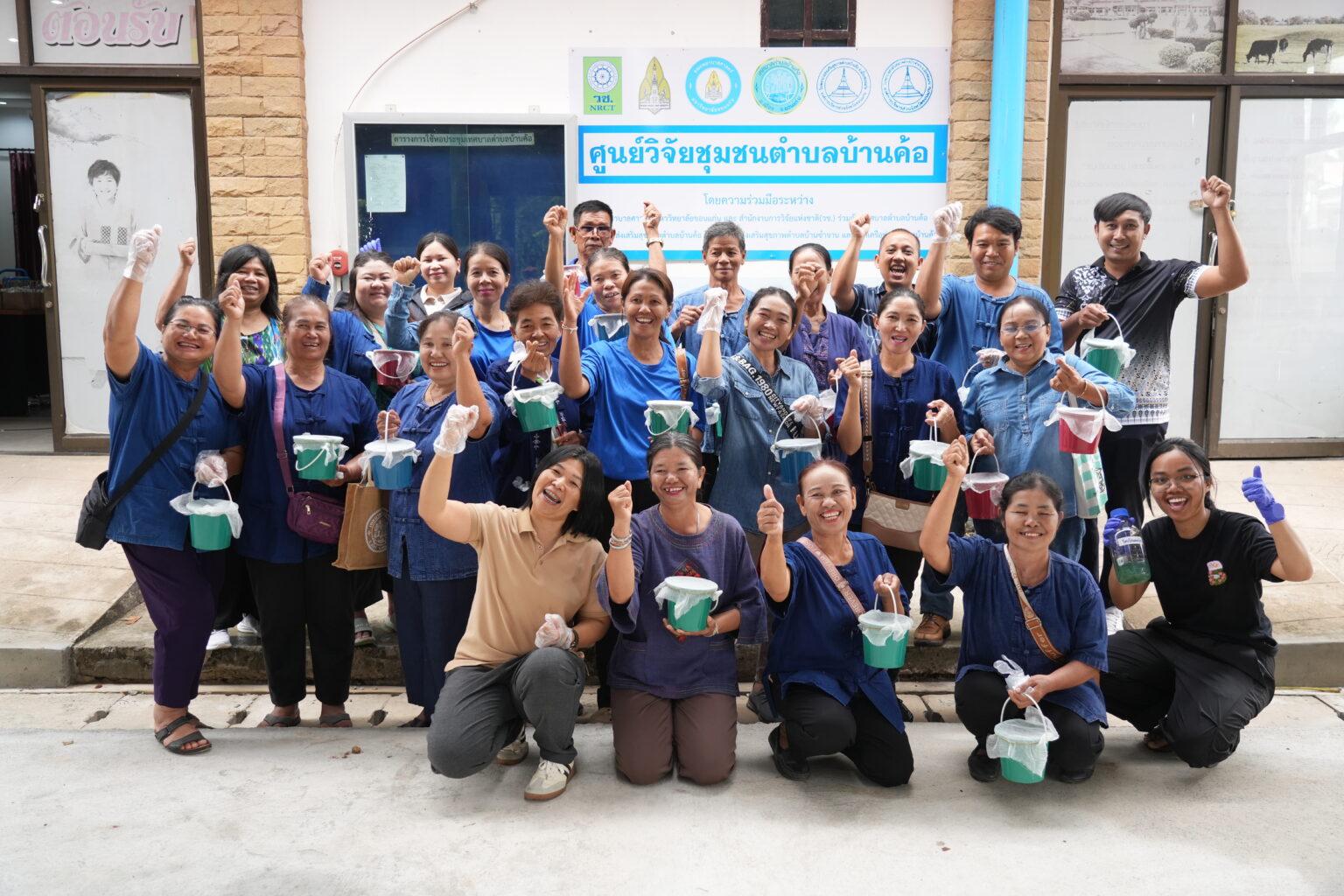
The Faculty of Science at Khon Kaen University (KKU), led by a research team including Assoc. Prof. Dr. Nuntavun Riddech, Dr. Pornrapee Sarin, Dr. Supranee Santanoo, and Ms. Atchariya Chansungnoen, recently conducted an academic service project titled “Promotion of Fungal Inoculant Expansion to Inhibit Soil-borne Plant Pathogens”. The workshop, held for 48 local farmers in the Ban Kho Sub-district, Mueang District, Khon Kaen Province, focused on equipping the community with the tools to produce their own biological control agents.
This initiative is a core component of the “Issue-Based Integrated Model Community Development Project” for the 2026 fiscal year. The primary objective is to address the recurring shortage of plant disease control agents among local farmers and to significantly reduce the financial burden of purchasing commercial biological products from the market.
The training emphasised the production techniques of Trichoderma, a highly effective biological fungicide used to inhibit and suppress various plant pathogens. The researchers explained that Trichoderma operates through three primary mechanisms: acting as a parasite on plant pathogens, competing for nutrients and space, and secreting specialised substances that inhibit the growth of harmful fungi.
The comprehensive curriculum covered five essential technical areas:
- Preparation of pure fungal cultures from culture dishes.
- Preparation of carrier materials using rice grains and rice straw.
- Inoculant expansion methods under optimised environmental conditions.
- Proper storage techniques to maintain quality and shelf life.
- Application methods, including seed dressing, soil mixing, and foliar spraying.
A notable highlight of the project is the utilisation of agricultural waste, particularly rice straw—which is often disposed of through burning—as a high-value raw material for bio-fungicide production. This approach directly supports the Circular Economy model and mitigates air pollution caused by agricultural burning. Furthermore, farmers were taught to produce liquid inoculants using molasses and treated tap water, providing a versatile and low-cost alternative.
Economic empowerment remained a central theme of the workshop. Participants engaged in cost-calculation exercises, comparing self-produced agents to commercial Trichoderma products, which currently retail between 60 and 310 Baht per kilogramme. By mastering these production techniques, farmers can significantly lower their overheads and ensure a sufficient supply of inoculants throughout the entire planting season.
The project is expected to generate multidimensional positive impacts: economically, by adding value to waste; socially, by enhancing the skill sets of farmers and personnel; and environmentally, by promoting long-term soil health. These outcomes align with the United Nations Sustainable Development Goal (SDG) 12: Responsible Consumption and Production, demonstrating the university’s role in deploying technology to address community-level challenges.
This project serves as a clear demonstration of translating academic research into practical applications that improve the quality of life for the farming community. It reflects Khon Kaen University’s steadfast commitment to being an institution that fosters innovation and delivers high-quality academic services that meet the genuine needs of society.