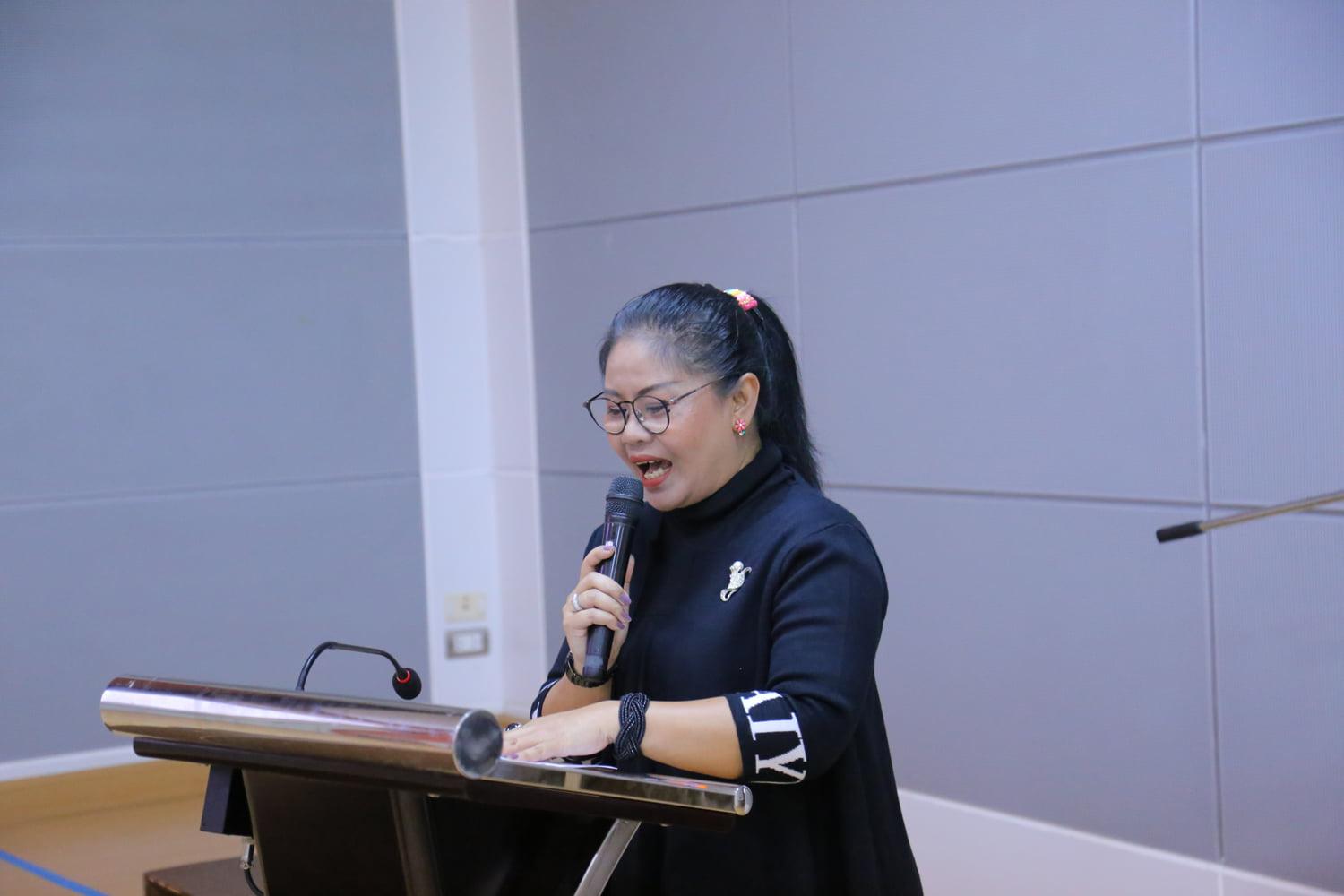
Khon Kaen University is advancing its internationalisation strategy through the KKU Outbound Visiting Scholar programme, which gives researchers a platform to exchange knowledge with world-class institutions. Dr. Wanwisa Wannapiphat, a KKU researcher, visited OsloMet in Norway to further research on Universal Design, HCI, Digital Learning, and AI, focusing on designing technology and education that is “accessible, usable, and beneficial for everyone,” while opening doors to research collaboration and educational development between Thailand and Norway.

In a world where digital technology has become part of everyday life, “access to technology” should not be a privilege for a select few, but an opportunity that everyone can benefit from equally—regardless of age, ability, experience, or technological background. The concept of Universal Design has therefore become a defining issue in how technology and education are shaped for the digital age.

Khon Kaen University continues to promote international academic exchange and collaboration through the KKU Outbound Visiting Scholar programme, which provides opportunities for academic staff to conduct research, teaching, or other academic work at higher education institutions and research organisations abroad. The programme allows scholars to learn from world-renowned experts, build collaborative networks, and bring knowledge back to benefit the university and Thai society.
Dr. Wanwisa Wannapiphat, a lecturer in the Creative Media Technology programme at the International College, Khon Kaen University, and Director of KKU Academy, is one such researcher. She travelled to serve as a visiting researcher at Oslo Metropolitan University (OsloMet), Norway, from 17 August to 7 September 2026, to exchange ideas and conduct research on Universal Design, Digital Learning, and Human-Computer Interaction (HCI). The visit also gave Dr. Wanwisa a chance to share her perspectives on research and her experience at Khon Kaen University in an interview with Oslo Metropolitan University, reflecting the potential of Thai researchers to present knowledge and research issues connected to global challenges.

From Family Experience to the Question: “Who Should Technology Be Designed For?”
Dr. Wanwisa’s research focuses on educational technology, human-computer interaction, and user experience, with one of her key interests being the design of digital interfaces for older adults. This interest grew out of a personal experience: watching her parents struggle with smartphones and digital applications raised an important question: “How can we design technology so that older adults and users with diverse needs can access and use it effectively?”

This question became the starting point for a broader view of design — one that extends beyond mere screen appearance. Designing technology for older adults does not simply mean increasing font size, adjusting colours, or arranging menus appropriately. It also requires consideration of the support systems surrounding users—including family, caregivers, assistance services, and guidance methods. Ultimately, good design is not just about being “usable,” but about helping users truly achieve their intended goals.

OsloMet: A Platform for Exchange on HCI and Universal Design
This visit to OsloMet provided an important opportunity to exchange knowledge with Prof. Frode Eika Sandnes, an expert in HCI and Universal Design, along with researchers from OsloMet’s Department of Computer Science, which is renowned for developing technology and innovation for society. The collaboration between researchers from both countries brought together two distinct perspectives: Norwegian expertise in Universal Design and technology, and Thai experience in educational technology and user behaviour research. These differences were not limitations but rather “spaces for learning,” particularly regarding language and cultural issues affecting digital system design. The Thai language, for instance, has writing characteristics different from English and Norwegian, especially regarding word spacing. These seemingly small details clearly reflect that Universal Design is not about applying a single model universally, but about understanding the context and needs of each user group.
Dr. Wanwisa therefore emphasises that the core principle of designing for everyone lies in “understanding and accessibility.” The key question is not only “Can the technology function?” but also “Is the technology truly usable for the people we intend to serve?”

Universal Design and Digital Education: Placing Learners at the Center
The concept of Universal Design is also directly connected to Digital Learning, an area where Dr. Wanwisa emphasises designing learning experiences with the learner at the centre. A good digital learning environment should not simply be measured by whether learners can use a platform or tool, but by whether it helps them achieve their learning goals—taking into account their backgrounds, expectations, experiences, and varying familiarity with technology. From small elements such as font size, colour, and information sequencing, to the overall structure of content, all of these factors affect learners’ ability to focus, organise information, and effectively connect new knowledge with prior experience. This perspective transforms “design” from being merely a matter for designers or technologists into the wider effort to create equitable education.

AI and New Challenges in Education: Advancing Alongside “Ethics”
Another important issue for the future design of technology and education is artificial intelligence (AI), which is playing an increasingly significant role in educational systems. Dr. Wanwisa sees AI as having the potential to tailor digital tools to different user groups and create more diverse forms of learning support. However, the implementation of AI in universities must go hand in hand with “ethics and responsibility,” particularly regarding transparency, disclosure of AI use, accountability for work produced, and the grey areas surrounding the use of Generative AI in creative work—issues that educational institutions and professional communities must collaboratively address to develop appropriate guidelines and ethical standards suited to the interconnected digital world.
Connecting the World, Bridging the Gap: Toward Accessible Education
The research experience in Norway also highlighted disparities in technology and education between Thailand and Europe, particularly regarding access to technology and digital skill development among learners in different regions. In this context, online learning systems and digital platforms can serve as important mechanisms for widening access to education, enabling learners to access courses and knowledge from various institutions even in resource-limited areas. This concept aligns with Khon Kaen University’s role in developing education and digital innovation to expand access to knowledge, reduce technological gaps, and translate research and innovation into practical applications for society.

From Individual Researcher Funding to Institutional Collaboration
The outcomes of this trip are not limited to the development of individual research but also mark the beginning of collaboration between Khon Kaen University and OsloMet, with considerable potential for growth. OsloMet expressed interest and provided space for discussion regarding Dr. Wanwisa’s research experience, as well as the issue of Universal Design in the Thai context, leading to interest in research collaboration and knowledge development.
This collaboration has the potential to expand into joint research and publications, academic exchanges, curriculum development, and international research networks. At the same time, OsloMet is prepared to provide learning resources, case studies, and research data, as well as connect academics and researchers in the field of Universal Design to jointly develop education that sustainably promotes equality in Thai society.
KKU Outbound Visiting Scholar: A Mechanism Driving the University onto the Global Stage
The KKU Outbound Visiting Scholar programme is therefore not merely a grant for studying or conducting research abroad, but a crucial mechanism for developing personnel capabilities and advancing Khon Kaen University’s mission internationally across multiple dimensions:
First: elevating research to the global level (global research collaboration). This provides opportunities for KKU researchers to work with world-class experts, expanding opportunities to conduct research and publish in international journals, while bringing new knowledge and technology back to further develop research groups and laboratories within the university.
Second: developing teaching and learning to world-class standards (world-class education). Experiences from international institutions can be applied to develop curricula, learning formats, and educational management, as well as open the way for future student exchanges and collaborative programmes.
Third: driving internationalisation. Relationships between researchers can be developed into institutional collaboration networks, building academic reputation and strengthening Khon Kaen University’s connections with global university networks.
Fourth: developing personnel capabilities (faculty development). This gives academics the chance to upskill and reskill in academic expertise, cross-cultural communication, and building international academic leadership.


News by: Benjamaporn Mamook
Information/Photos: Oslo Metropolitan University / Dr. Wanwisa Wannapiphat