At a time when technology is changing at breakneck speed and artificial intelligence (AI) is reshaping the world of work, Thailand faces mounting challenges across its economy, society, and demographic structure. The key question, therefore, is not merely how Thailand can keep pace with the world, but how it can develop its people, create opportunities, and turn change into a driving force for national progress.

The perspective of Prof Dr Yosanan Wongsawat, Deputy Prime Minister and Minister of Higher Education, Science, Research and Innovation (MHESI), points to the direction Thai education must now take: moving beyond old frameworks and integrating research, innovation, and human capital development to build a future in which Thai people can grow and compete on the global stage.
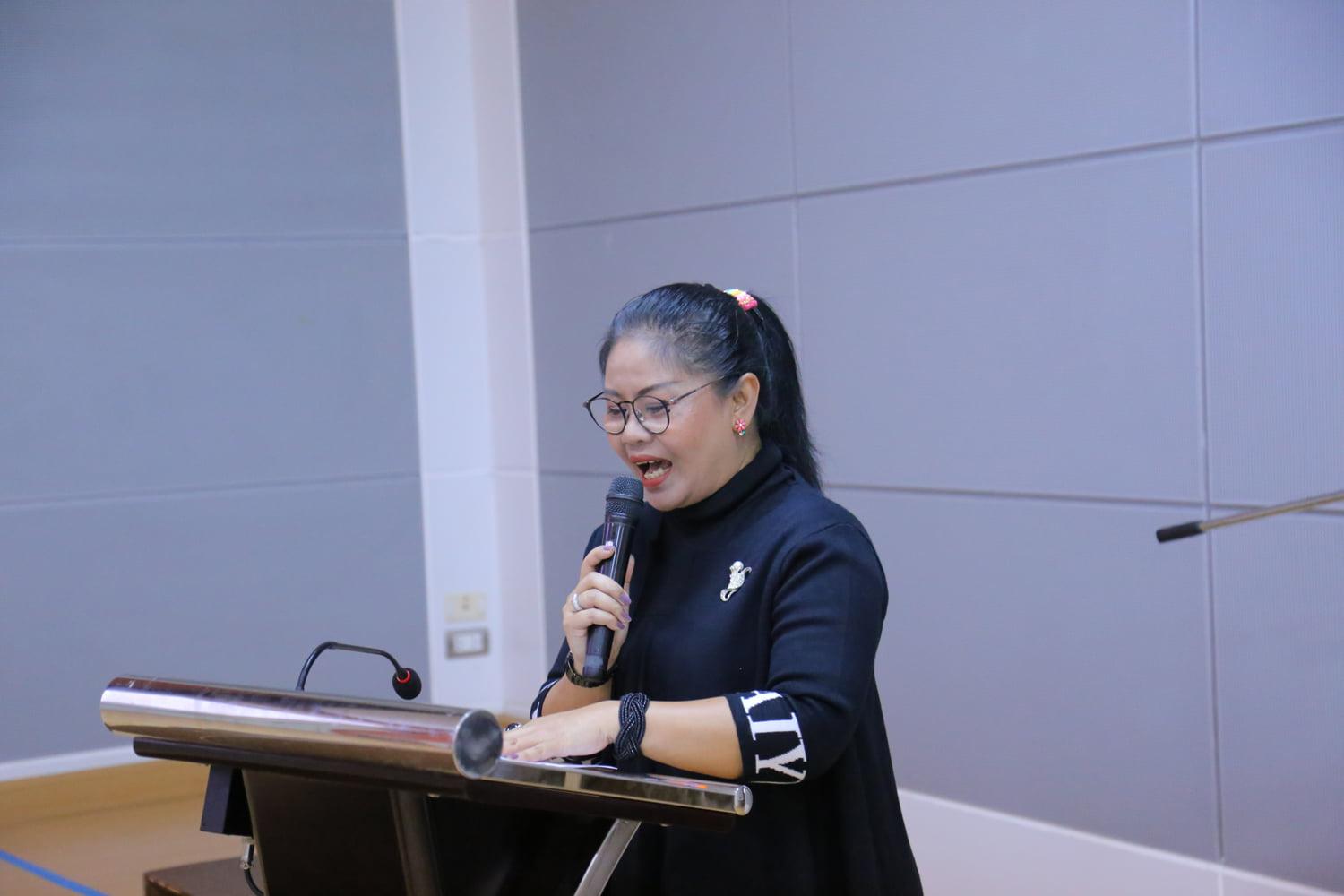
The special interview, entitled “When the World Changes Faster Than Ever: Crisis or Opportunity — MHESI Policy and the Future of Thai People”, was held on Friday 11 September 2026 at The Heritage Grand Khon Kaen Hotel and Convention Centre, Khon Kaen Province. It illuminated key issues facing Thailand’s higher education system: building new economic engines, coexisting with AI, addressing an ageing society and declining birth rates, and defining the role of universities as an intellectual force helping the country navigate change.
the country navigate change.

Prof Dr Yosanan observed that one of the major challenges facing Thailand at this critical juncture is managing and developing human capital while creating a new growth engine to enhance competitiveness and lift the country towards high-income status. The heart of the matter is not simply raising people’s capabilities, but building a system that links human development with the needs of the future economy and labour market. Universities and MHESI play a critical role in driving this process – from basic research to translating knowledge into innovation and adapting the education system to new forms of work.
Creating high-value jobs that can compete in the global market therefore requires an ecosystem that tangibly connects research, innovation, and workforce development. Only then can knowledge from universities move beyond classrooms and laboratories to generate new economic opportunities for the country.

AI Is Not a Competitor to Humans, But a Force That Enhances the Potential of Thai People
Amid the rapid advancement of AI, many people ask: as technology grows capable of increasingly complex tasks, what role will humans still play, and can universities develop people fast enough to keep up? In the Minister’s view, dealing with AI is not about defeating technology but about preparing people to work effectively alongside it.
A strong foundation of basic knowledge remains essential for reasoning, verifying information, and deciding how technology should be used. At the same time, humans must remain part of the value chain – from creating knowledge and defining problems to applying AI in industry – particularly technologies such as agentic AI, which can make complex work processes more efficient. In drug development, for instance, AI could shorten timelines considerably. This illustrates that AI is not merely a tool for convenience but one that can fundamentally transform research and the landscape of education.
Universities are therefore a critical starting point for this transition, as they develop people’s skills, build foundational knowledge, and encourage learners to use technology to create new value for society and the economy.

Universities as a Safe Space for Intellectual Discourse Amid a Divided Society
Beyond their roles in education and the economy, universities also carry an important mission as spaces of reason and knowledge, especially in a society of diverse and often divergent opinions.
Prof Dr Yosanan sees universities as places where principles and reasoning can inform decision-making, drawing on expert data and knowledge for the benefit of the country. Their role, therefore, should not be limited to producing graduates or publishing research; it should also include using knowledge to raise public awareness, foster understanding of complex issues, and support evidence-based decision-making.
Collaboration with the public sector, civil society, and other sectors is another important means by which universities can build understanding and guide society past its differences through the power of data, knowledge, and reasoned exchange.

Declining Birth Rates: Not Just a Demographic Crisis, But a Challenge for Restructuring Higher Education
Another structural challenge facing Thailand is the falling number of births and the shrinking working-age population, which are forcing universities to reconsider how they organise education and develop the workforce over the long term.
Prof Dr Yosanan pointed to the need to align curricula with student numbers and the country’s needs, and for higher education institutions to share resources and spaces, so that the education system can adapt to demographic change.
At the same time, a more international outlook will widen opportunities for Thai graduates to work globally, alongside new mechanisms that connect education with local and national needs (a Local Quest Engine). For universities, adaptation is therefore not merely about coping with falling enrolment, but about designing a higher education system that is flexible, shares resources efficiently, and produces a workforce with room to grow, both nationally and internationally.


Competing on the Global Stage While Joining Forces to Solve Thailand’s Challenges
Asked whether Thai universities should compete with one another to improve global rankings or cooperate for the country’s benefit, Prof Dr Yosanan said both approaches can proceed in parallel.
University rankings are one tool for comparing and evaluating standards in certain areas, helping universities gauge their development relative to international institutions. However, a focus on rankings alone may not address Thailand’s diverse needs.
What matters most is that universities maintain academic strength and global competitiveness, while also applying knowledge and technology to solve the problems the country faces – whether resource management, the environment and climate change, disasters, or the creation of new jobs and occupations.
Collaboration among universities is therefore key to maximising the potential of each institution, with a shared goal of using knowledge to create opportunities and improve people’s quality of life.


The Future of Thai Education: Building People Ready to Change the World

The Minister’s perspective makes it clear that Thailand’s challenges in an era of rapid global change cannot be solved through technological development or curriculum adjustments in isolation. They require systematic transformation: developing human capital, building new economic engines, applying AI, restructuring higher education, and fostering cooperation between universities and other sectors of society.
In this context, universities are not merely places for transmitting knowledge or producing graduates, but a critical mechanism for driving innovation, developing the workforce, generating knowledge to solve national problems, and preparing society for the future.
Ultimately, whether global change becomes a crisis or an opportunity depends on how well Thai people can adapt and put knowledge to use, in pursuit of a shared goal: making education, science, research, and innovation a driving force for Thailand and building a better quality of life for all its people.


News article by: Benjamaporn Mamook
Photos by: Nattawut Charuwong / Nattawut Phetprapai / Atthaphol Hampong / Nattapong Chamnanuea / Chaychan Lada