
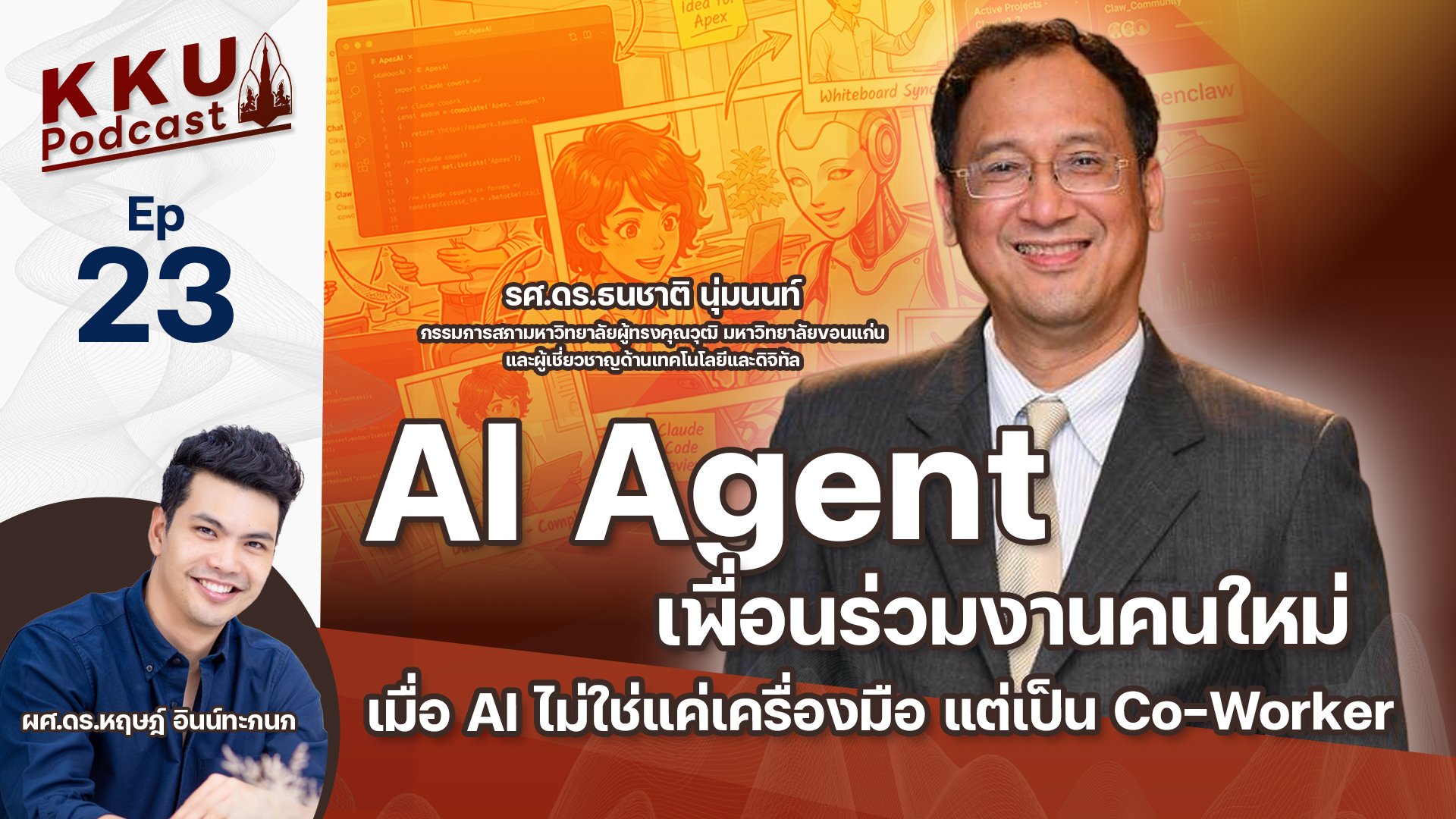
KKU Podcast EP. 23 delves into the world of AI with Associate Professor Thanachart Numnonda, a technology and digital expert (University Council Members (Distinguished Experts)). He analyses the future of labour, education, and essential skills that people in the new era must possess, as AI is no longer just “helping to think” but starting to “perform tasks for humans,” becoming a “colleague” or true co-worker. He also shares a crucial perspective: the most concerning individuals might not be those who don’t know how to use AI, but rather those who stop learning and are unwilling to adapt in a world that is changing faster every day.
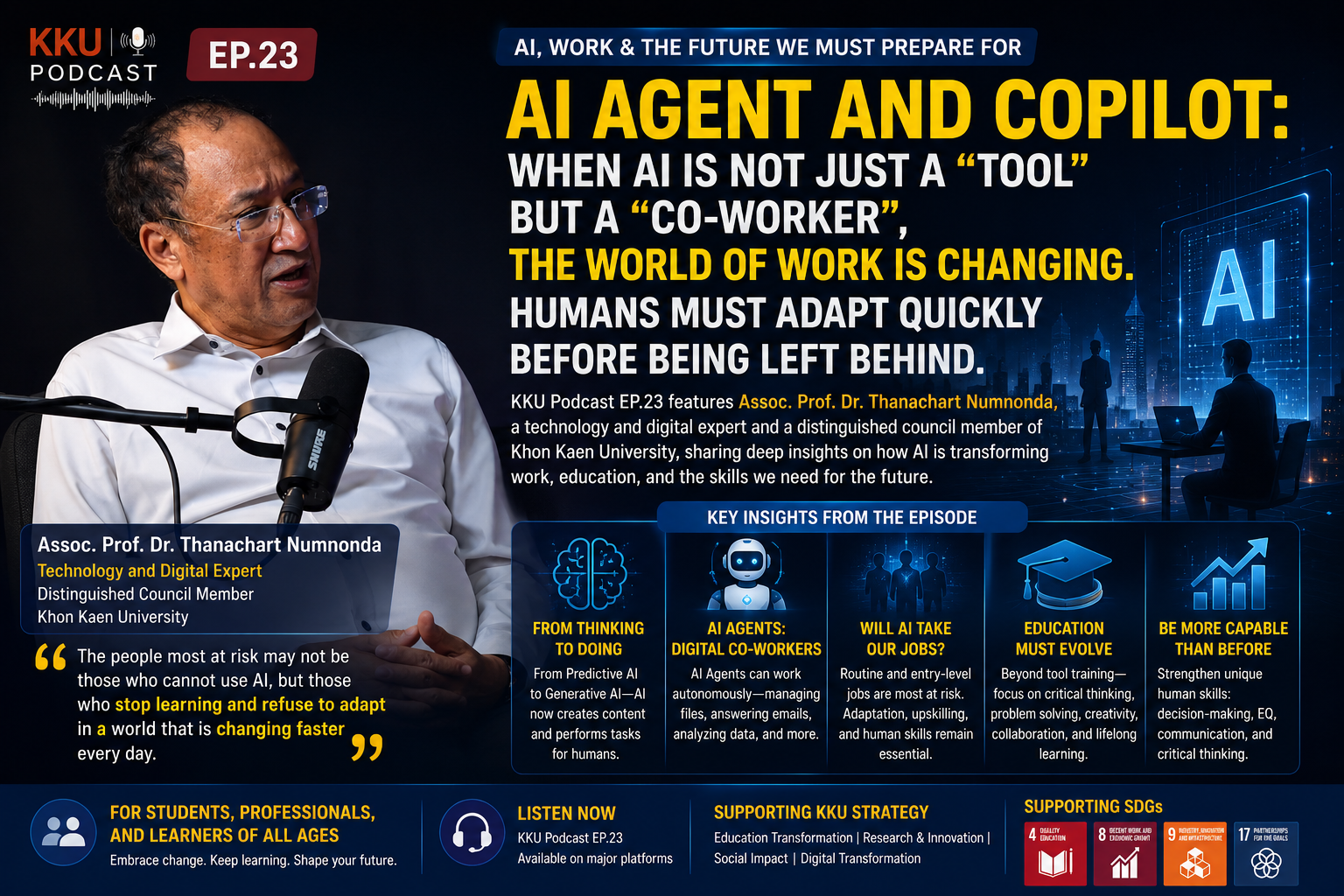
According to Associate Professor Dr. Thanachart Numnonda, a technology and digital expert, AI systems were previously used primarily for prediction or data recognition, such as facial recognition, voice recognition, or self-driving car systems, categorised as Predictive AI. However, a significant turning point occurred when the world entered the era of Generative AI, or AI that can “create” various forms of content, including text, images, audio, or even programming code.
Previously, AI was merely a “brain” that helped with thinking, but today, AI is developing “hands and feet” that can connect with other tools and genuinely perform tasks in place of humans. For instance, it can connect with email, calendars, document software, or presentation programs to help automate tasks.
“In the past, AI only helped to think, but now it’s starting to do work for people,” he states. The concept of an AI Copilot emerged as a “work assistant” capable of managing daily tasks, from summarising news and preparing meeting slides to writing reports, analysing data, and creating dashboards quickly.
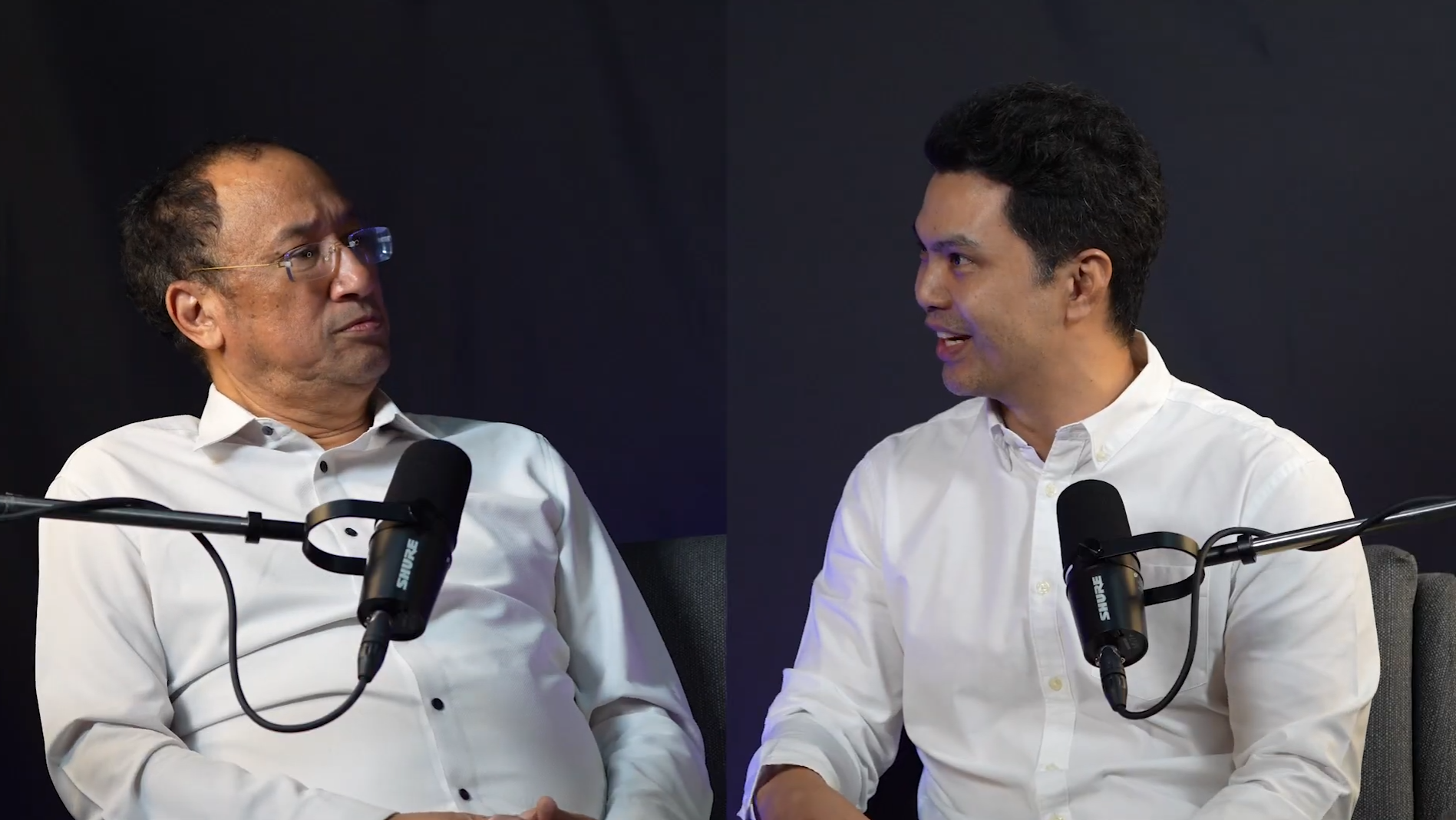
AI Agent: A New World of “Digital Employees”
What is gaining significant attention is the AI Agent, an AI system that can perform tasks automatically without needing step-by-step commands. A widely discussed example is the co-worker system, which can help manage files, read documents, analyse data, rename files, or organise documents on a computer, as if having a “personal assistant” working constantly.
Associate Professor Thanachart believes that in the future, organisations, and even small businesses, might have several “AI employees” performing different roles. One might answer emails, another handle marketing, and another assist with content creation.

AI Agent is no longer just a tool; it is becoming a co-worker.
Will AI Really Take Away Jobs? This is a key question many are concerned about. Will AI replace humans?
Associate Professor Thanachart suggests that repetitive or routine tasks are most vulnerable to disruption, especially jobs at the junior or entry-level, such as document organisation, data entry, basic coding, or general content creation. In the past, some tasks might have taken several hours, but now AI can complete them in minutes, such as writing programs, creating basic games, or preparing presentation slides.
However, AI does not mean that humans will “disappear” entirely. Instead, it will change the “nature of work,” and organizations might reduce new hires rather than immediately laying off a large number of employees.
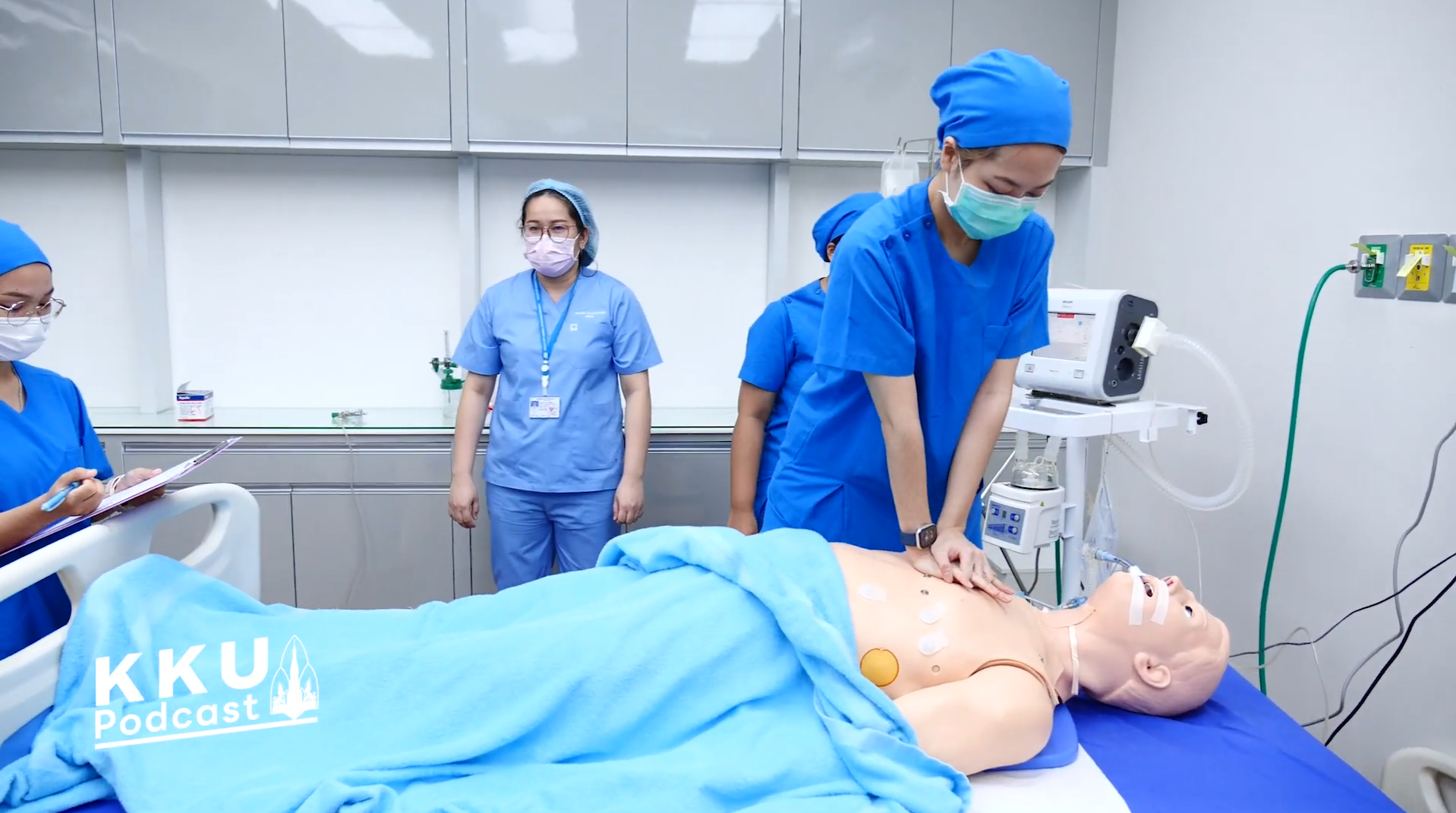
AI May Not Replace All People, But Those Who Don’t Adapt May Find Work More Challenging.
Another significant point is the impact on education and universities. Associate Professor Thanachart states that future teaching will not solely focus on teaching students “how to use AI tools,” because tools change very quickly. Today, one platform might be popular, but within a few months, new tools might replace it. What is more important is teaching students “how to use AI to solve problems when they arise.” Therefore, universities must focus on developing essential skills: Critical Thinking, Problem Solving, Creativity, Collaboration, and Lifelong Learning, because these are skills that AI cannot yet fully replace in humans.
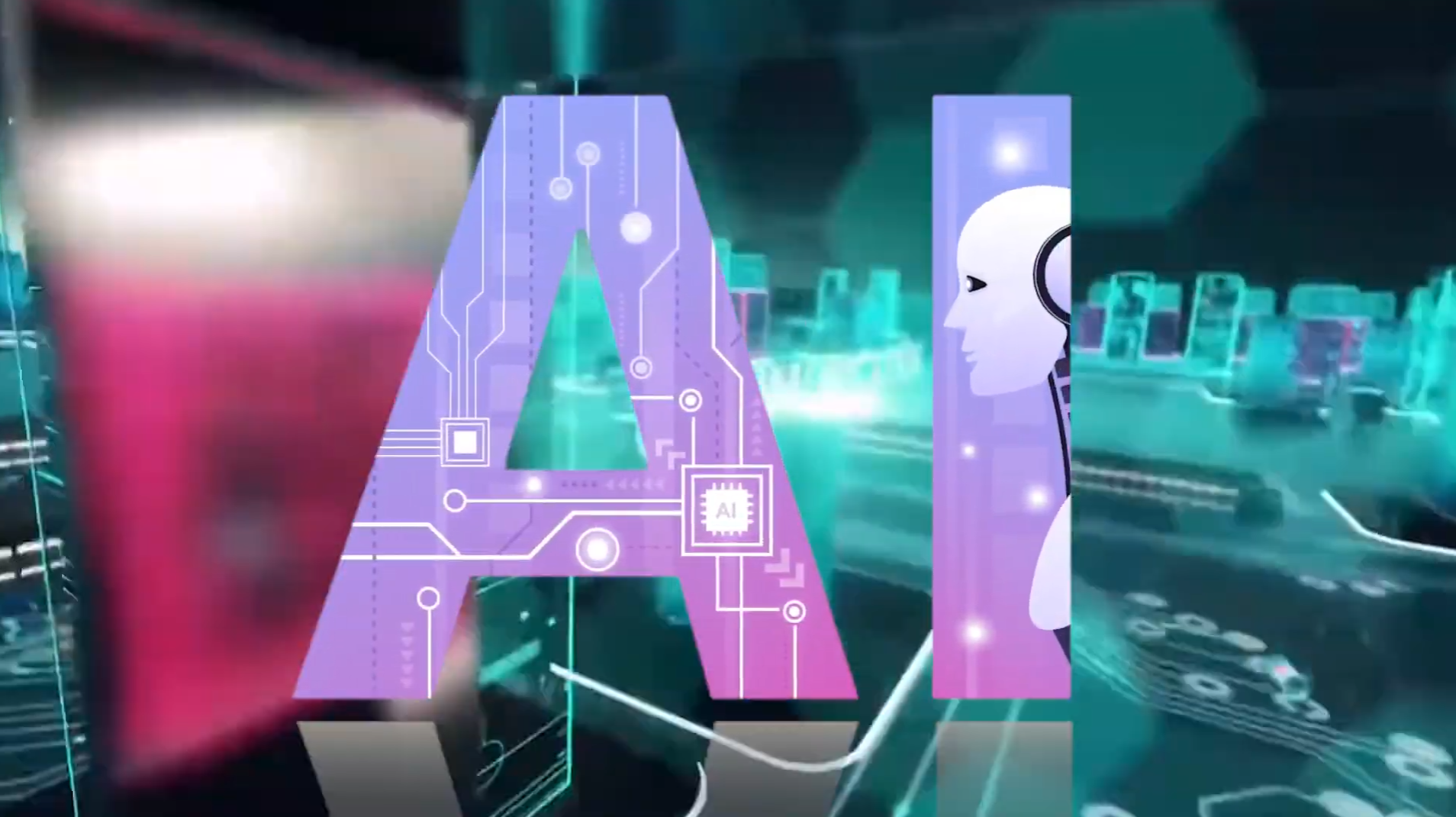
In the New Era, Workers Must Be “More Competent” Than Before.
Associate Professor Thanachart emphasises that in the AI era, workers still have a future but must enhance their capabilities. “If human performance remains the same, but organisations can use AI at a lower cost, the question is, why would organisations hire people?” Therefore, the new generation must develop skills that AI finds difficult, such as decision-making, understanding human psychology, communication, emotional intelligence (EQ), and critical thinking. Simultaneously, they must be open to continuous learning, as no tool will remain the best forever, and no profession is guaranteed to remain the same in the next 10 years.
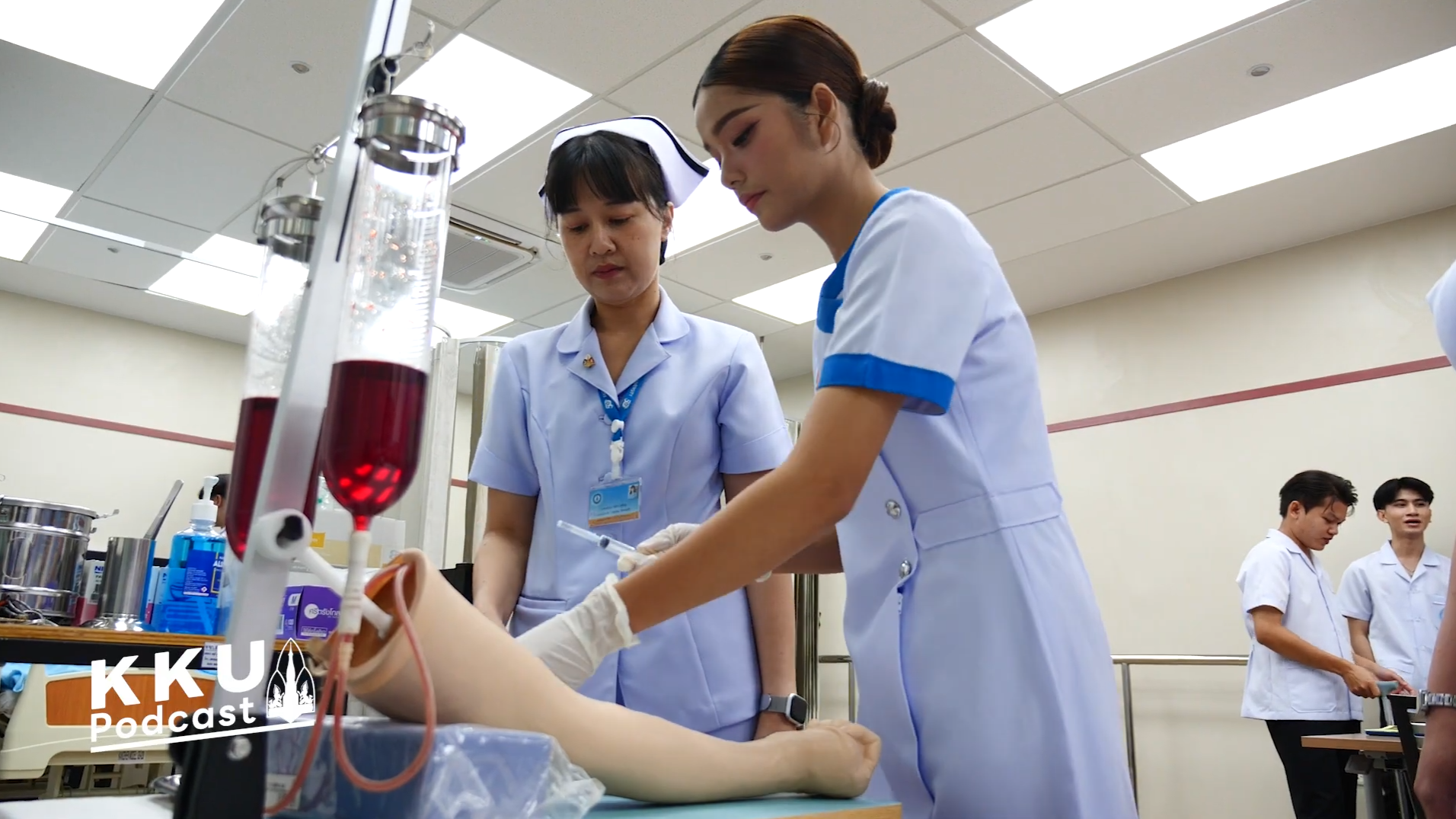
Don’t Fear AI, But Learn to Live With It.
In the concluding remarks of the discussion, Assoc. Prof. Dr. Thanachart offers important advice to students and the younger generation: the most vital thing is not to fear AI, but to be ready to learn and adapt constantly. “Graduating is not the end of learning, but the beginning of lifelong learning.” The future world is changing rapidly, and many professions that will exist in the future may not even exist today. However, those who are open to new things and continuously develop themselves will undoubtedly maintain their place in the AI era.
KKU Podcast EP.23 AI Agent: A New Co-worker. When AI is not just a tool, but a Co-worker.
News Article by Benjamaporn Mamook
Images by Natthawut Jarunpong / Chaichan Laada / Natthawut Phetpraphai / KKU Podcast EP.23