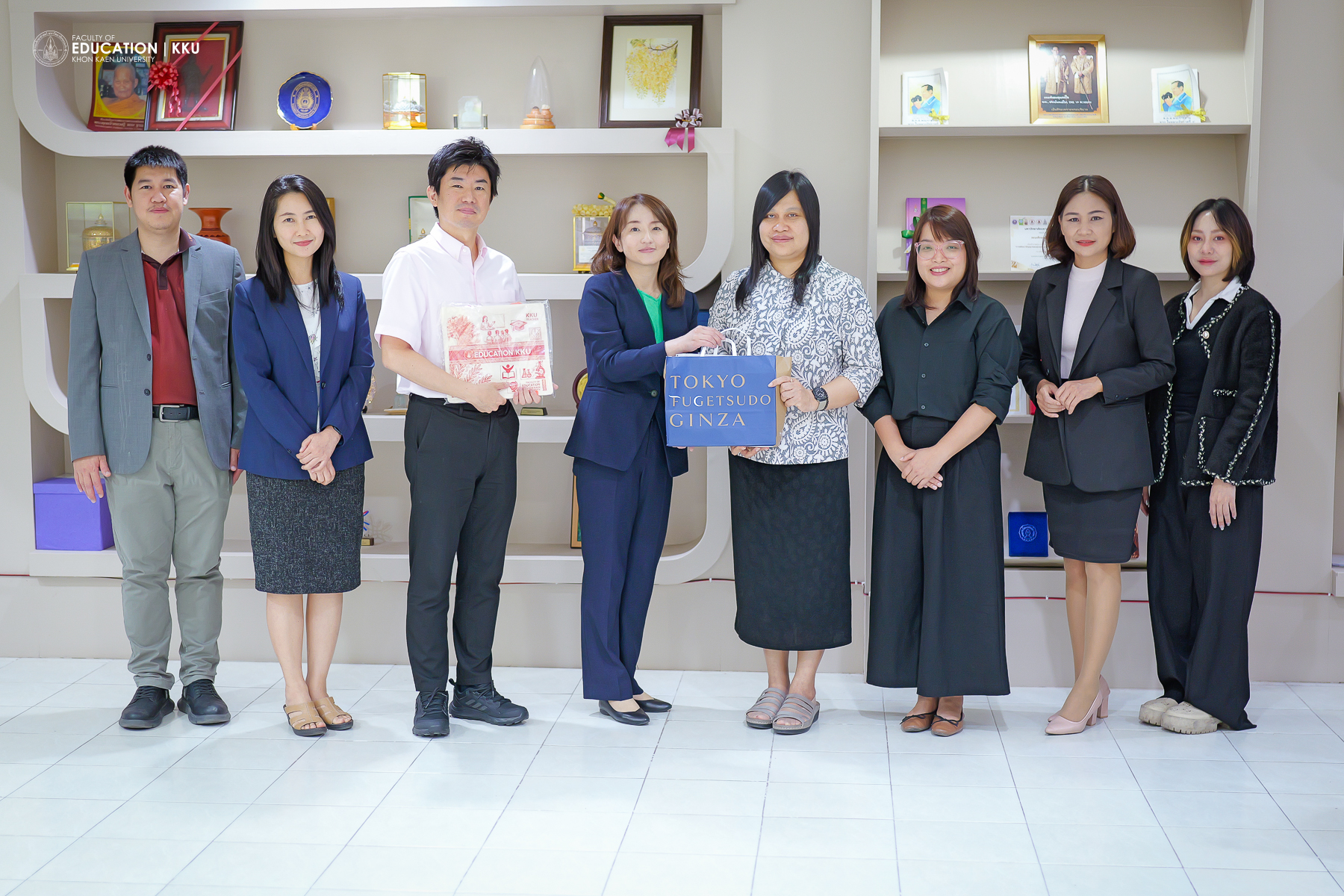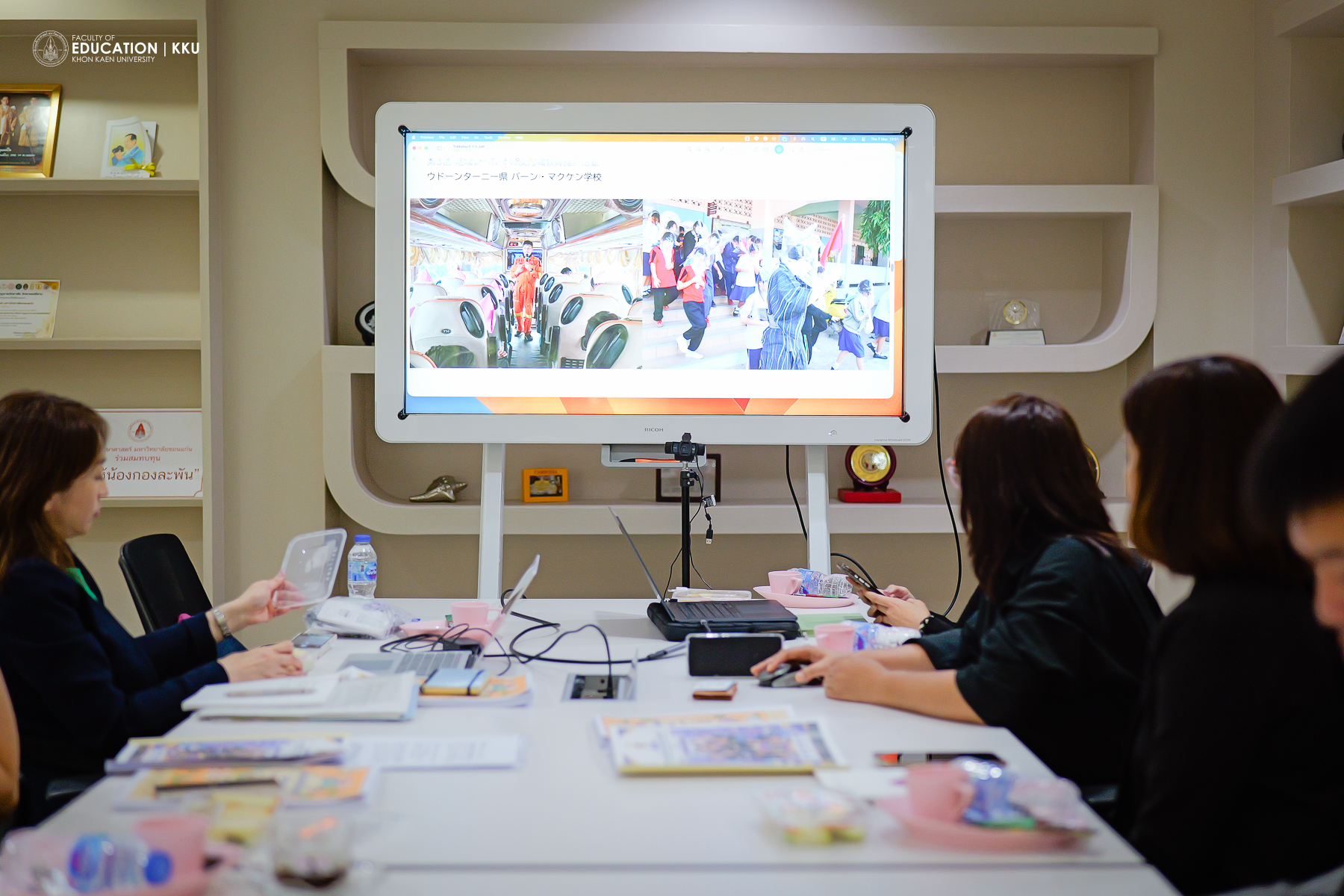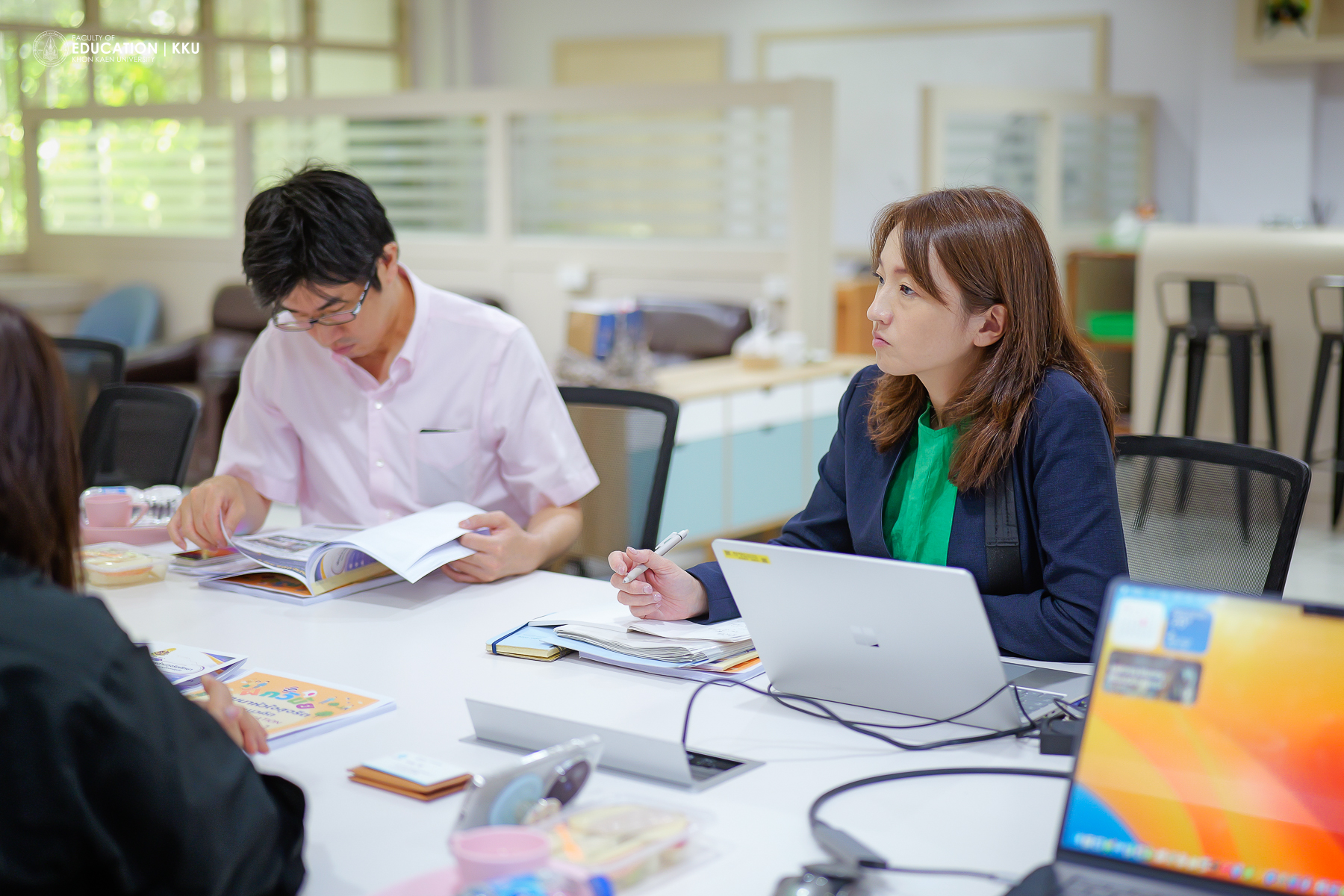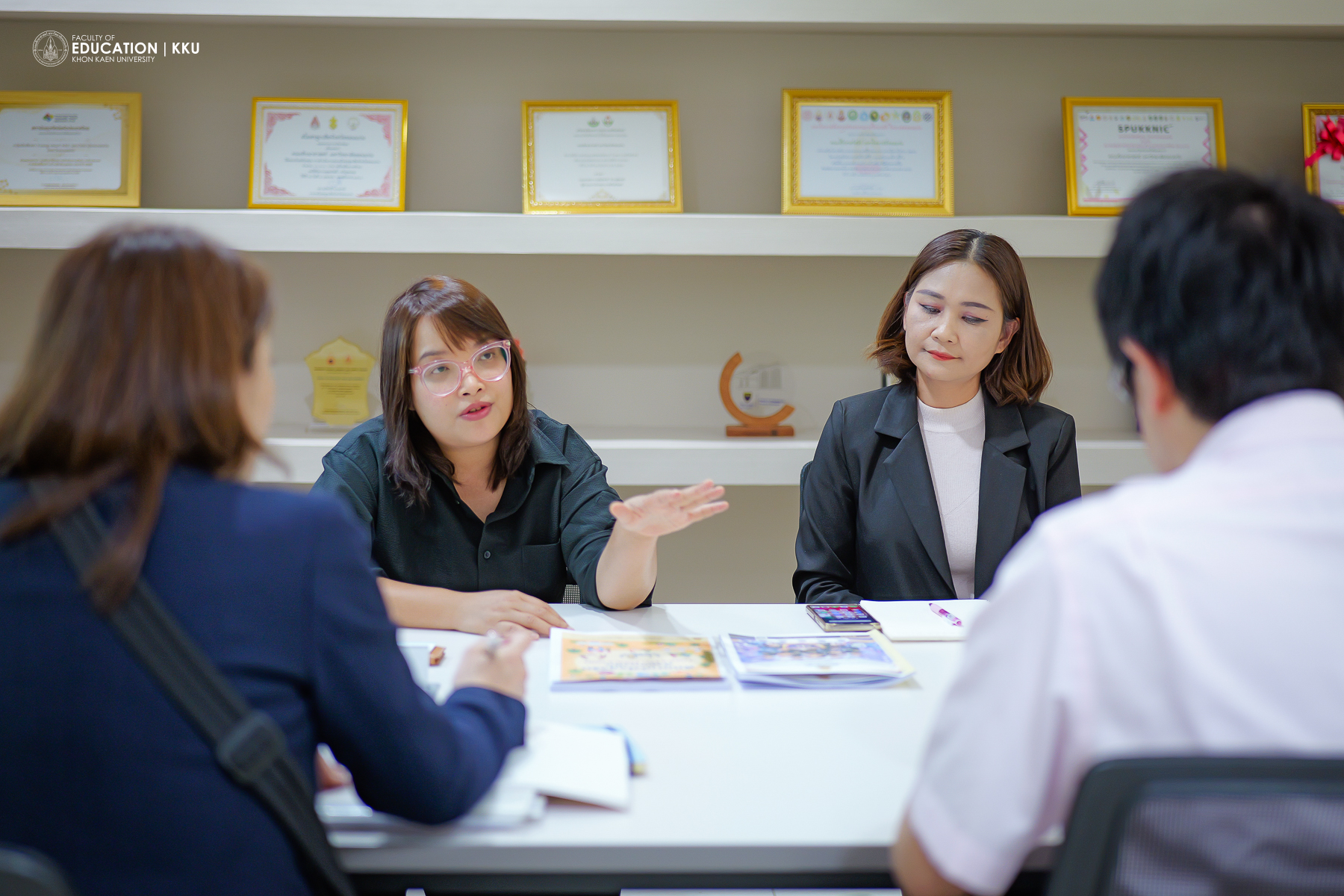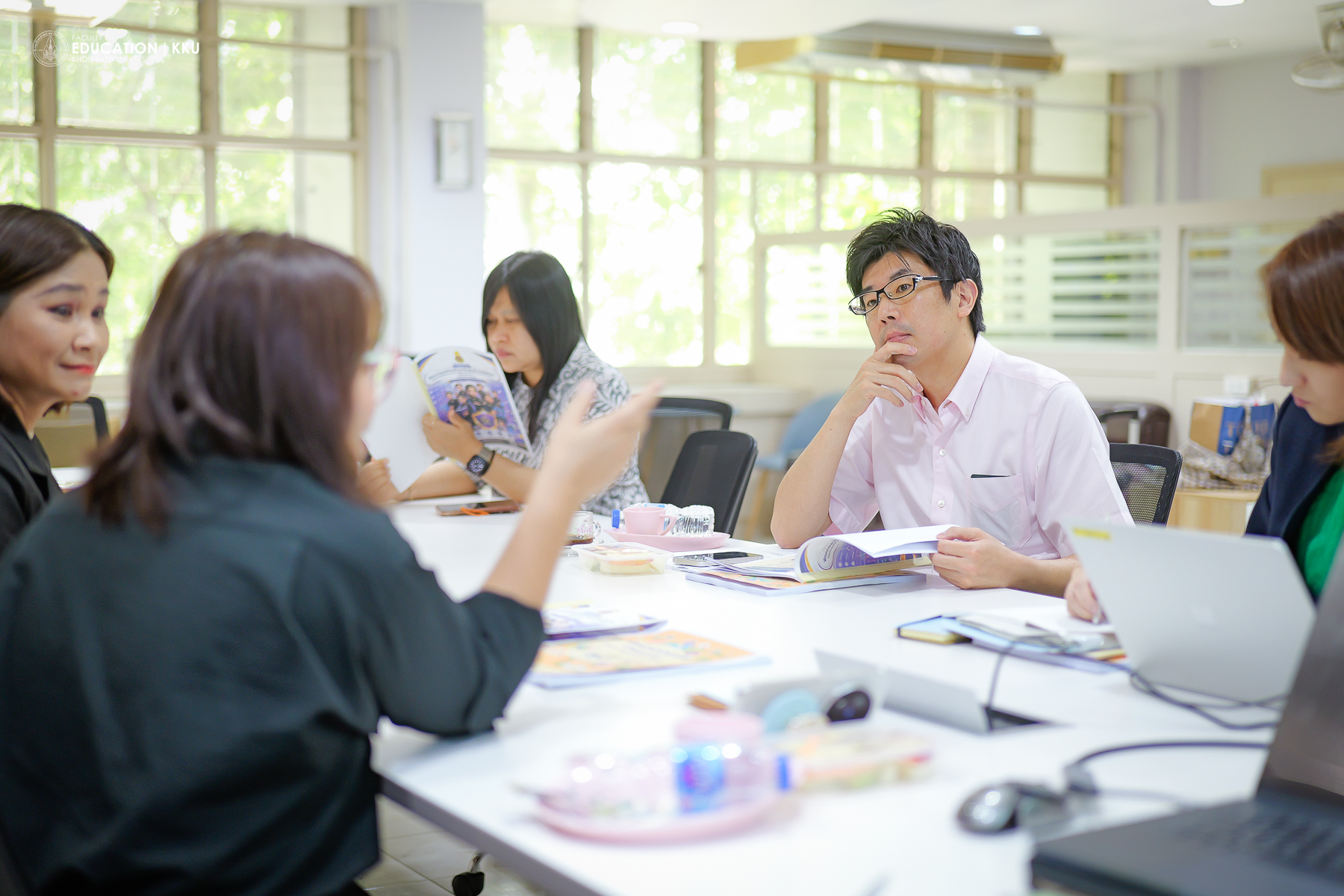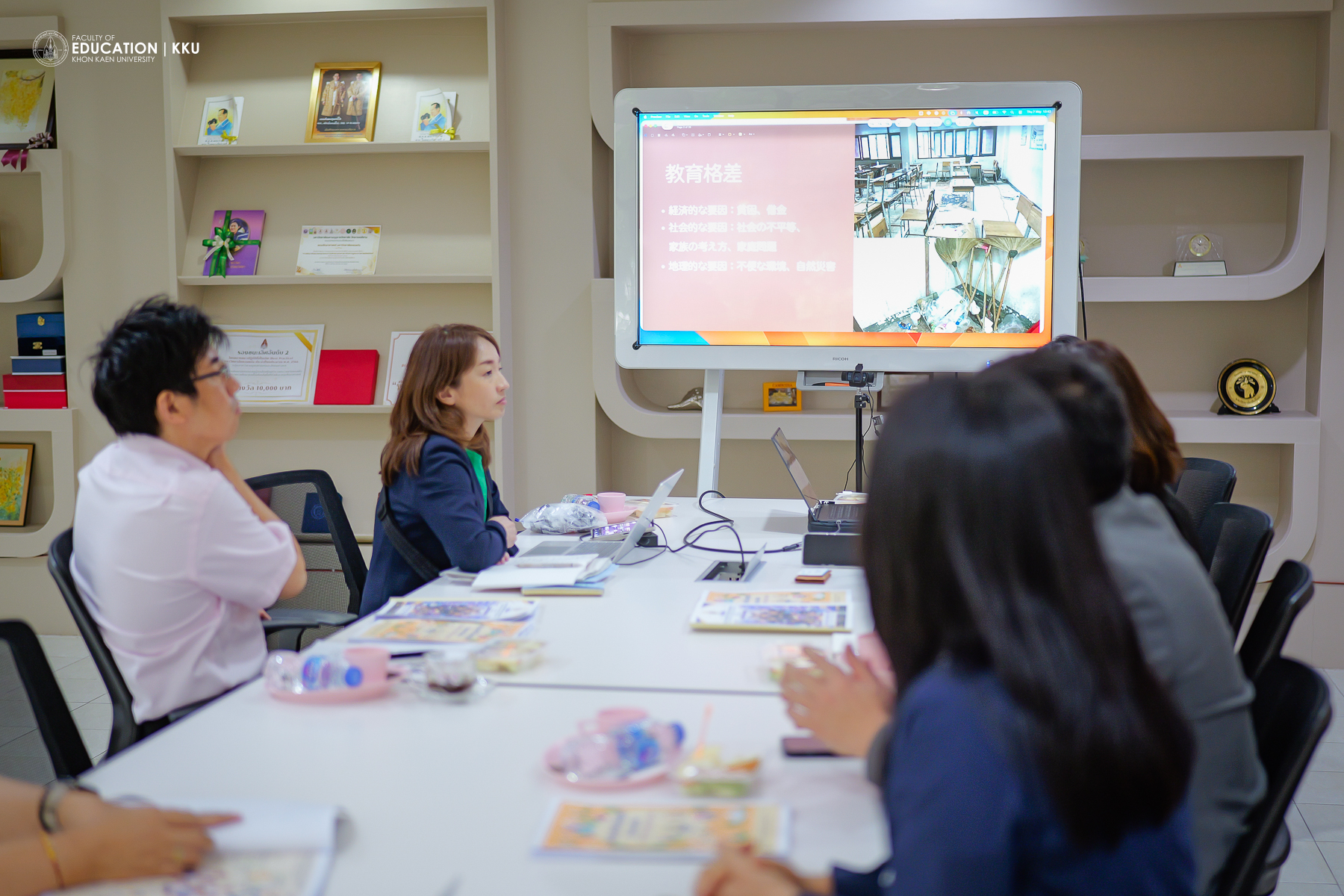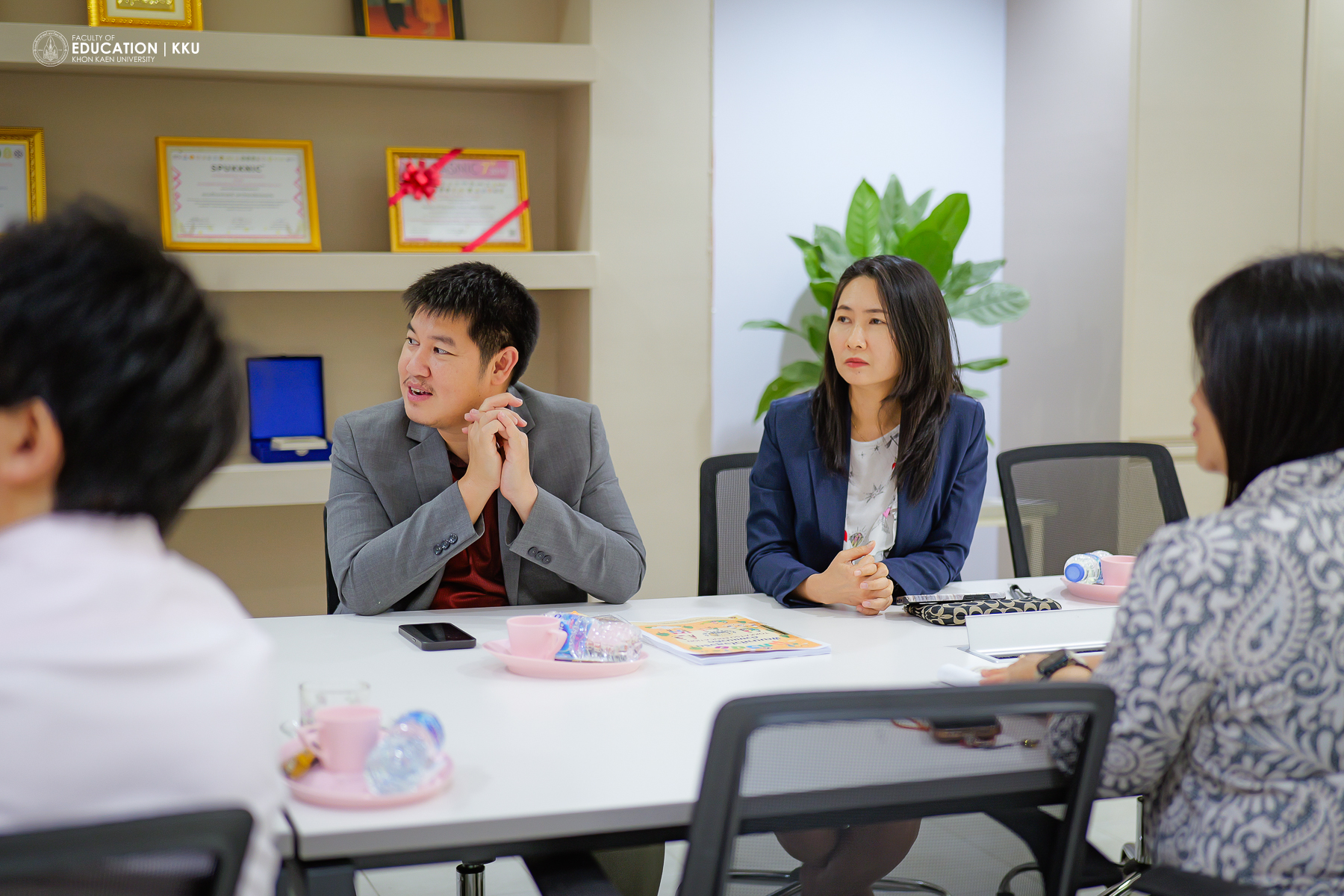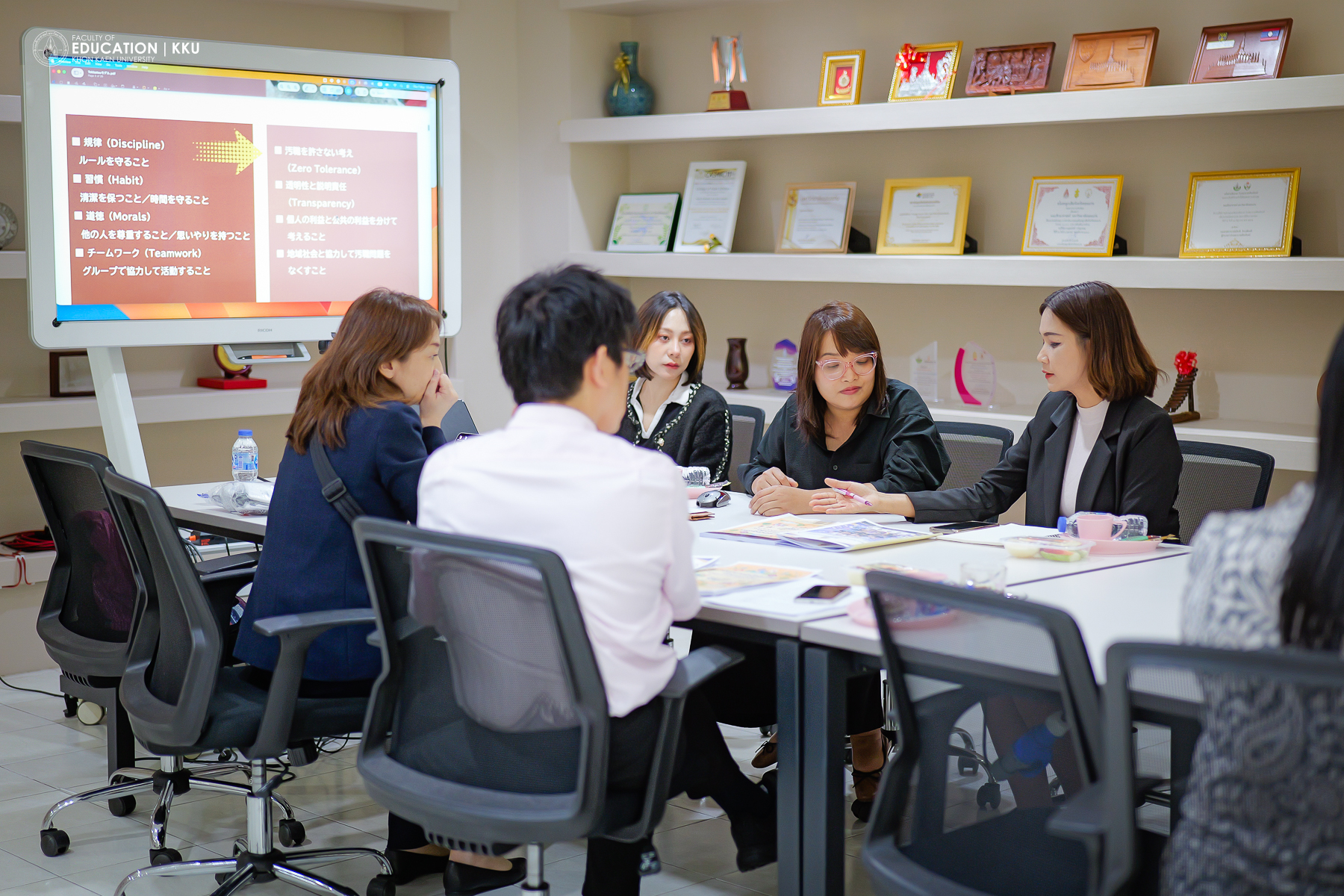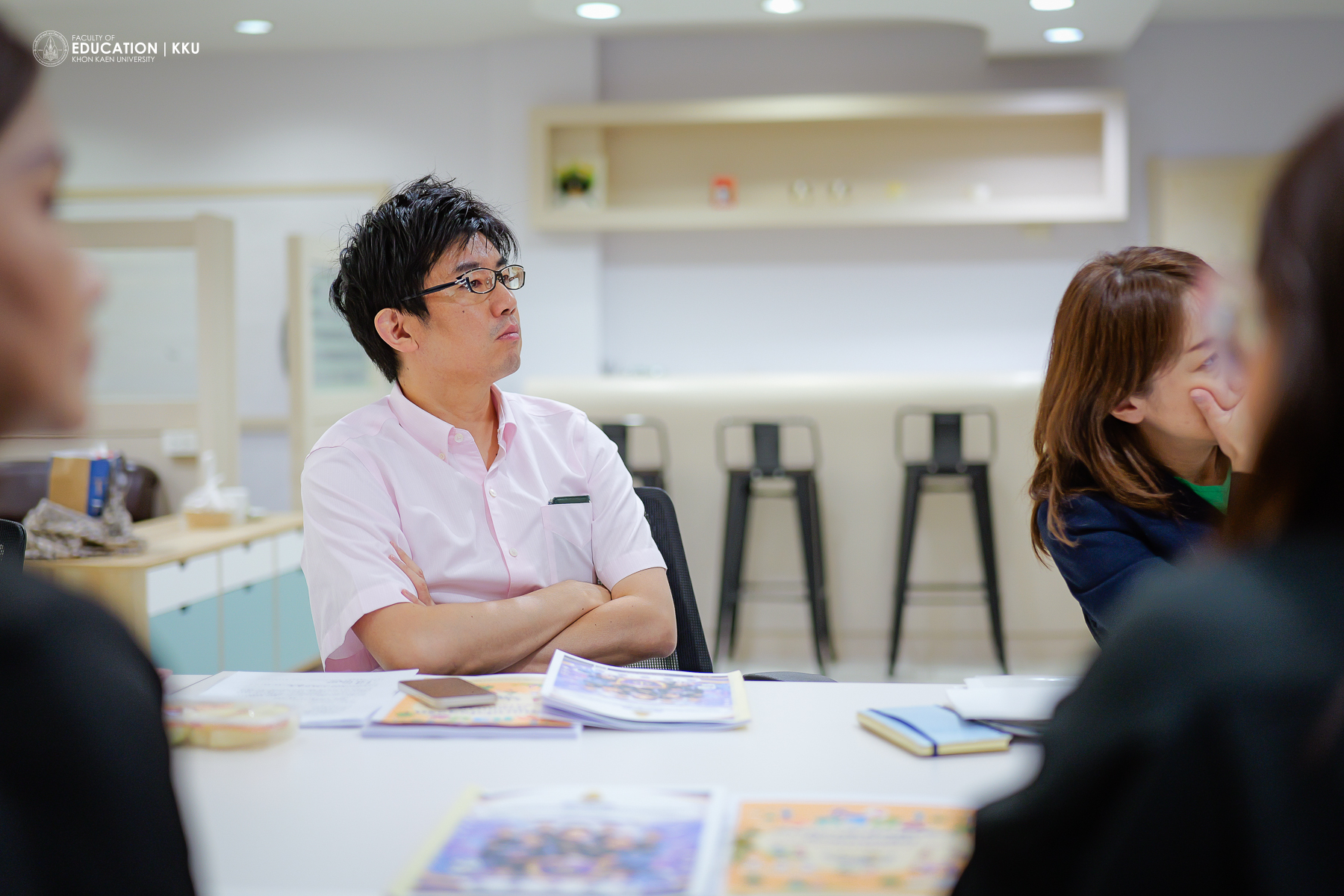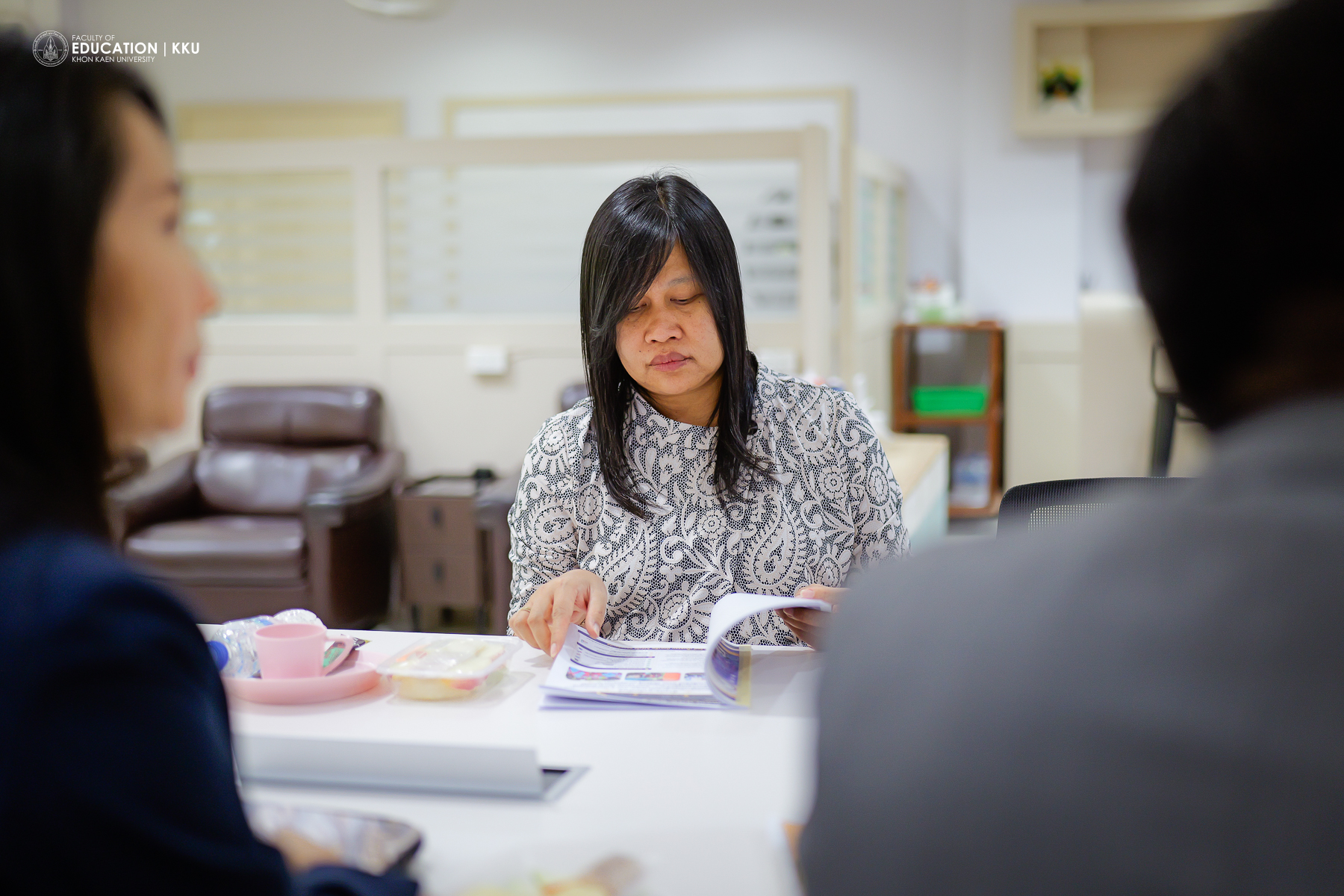

7 May 2026 – Faculty of Education, Khon Kaen University The Faculty of Education, Khon Kaen University, led by Assoc. Prof. Dr. Jarunee Samart, Associate Dean for Education, together with Assoc. Prof. Dr. Pornsawan Vongthatam, Associate Dean for Research and Innovation, and Asst. Prof. Dr. Nattapon Meekaew, Assistant Dean for Network Management and International Affairs, joined by Asst. Prof. Dr. Watchara Suyara, Chair of the Japanese Language Teaching Programme, and Ms. Nattaradee Pimsrising, Senior Professional Level Supervisor from the Khon Kaen Primary Educational Service Area Office 1, welcomed Mr. Takamasa TANIMURA, First Secretary of the Embassy of Japan in Thailand, and Ms. Ai CHUMAN, Representative from the Ministry of Education, Culture, Sports, Science and Technology of Japan (MEXT). The meeting was held to discuss and share detailed information on the implementation of Special Activities for holistic student development, known as “Tokkatsu.”
The objective of this visit was to gather information on the implementation of Tokkatsu within schools in Khon Kaen province and Khon Kaen University, where the concept has been actively implemented. MEXT is currently considering the promotion of positive aspects of Japanese-style education internationally to serve as a key guideline for international education directions beyond 2030. The discussion focused on three main themes: 1) The relationship between Tokkatsu practices in the area and the supporting role of Khon Kaen University; 2) The background of Tokkatsu’s introduction into the Thai education system; and 3) The current status and future roadmap for national-level implementation.
Furthermore, the meeting highlighted the application of Tokkatsu in cultivating fundamental values of honesty and anti-corruption among youth. The insights gained from this discussion will serve as a vital evidence base for the Japanese government in further developing international holistic education frameworks.
Tokkatsu (Tokubetsu Katsudou) or “Special Activities for Holistic Student Development” is an educational innovation from Japan that emphasises student development in various dimensions beyond the academic curriculum. It prioritises the development of social, emotional, and ethical skills through daily routines, such as classroom cleaning and waste sorting, class meetings and discussions, club activities, and road safety and compliance with traffic regulations, to develop well-rounded citizens.